

 EN
EN ES
ES FR
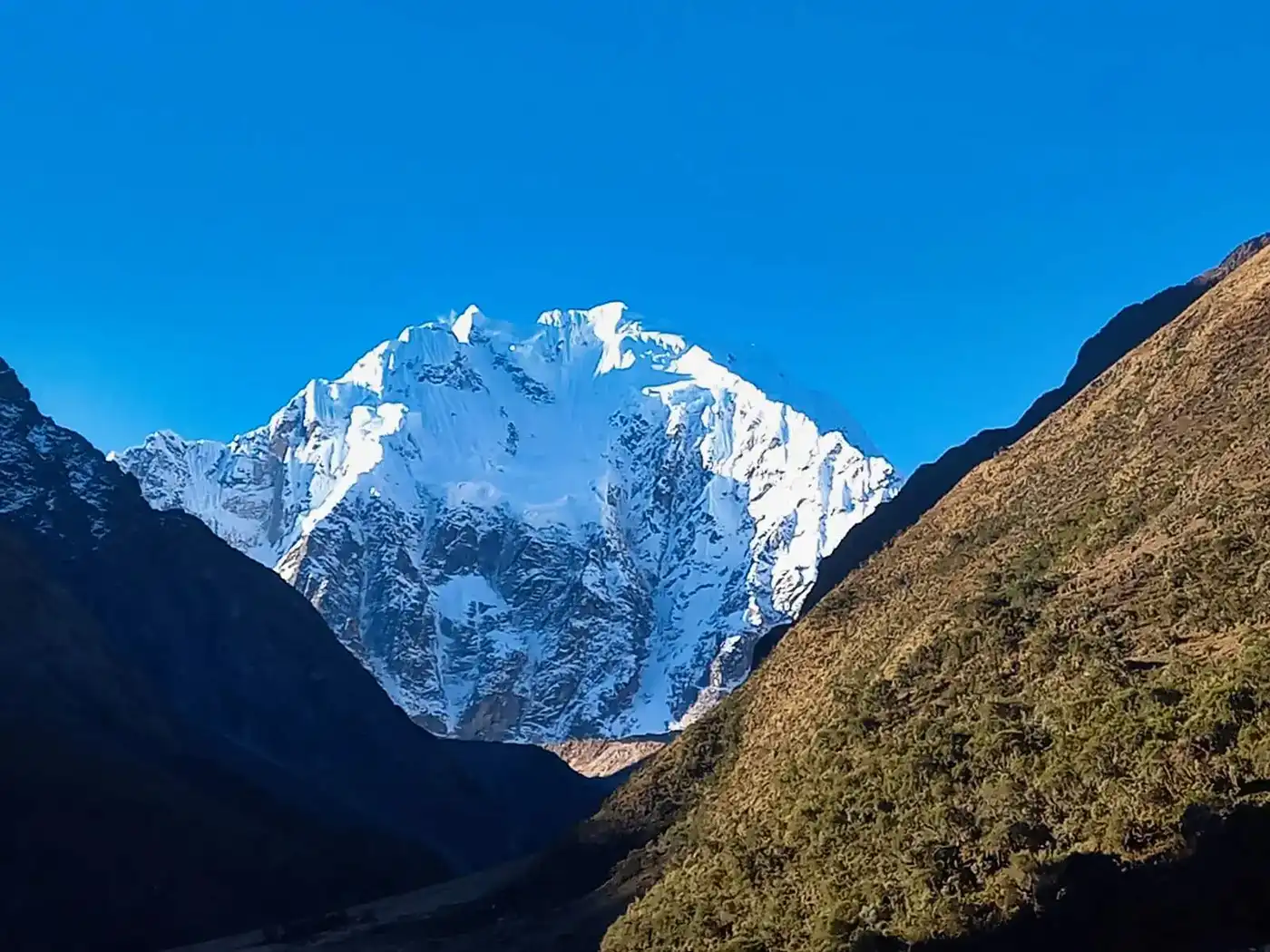
FRAusangate (6398 m / 20991 ft) is considered one of the most beautiful snow-capped mountains in the Andes. The region surrounding the mountain offers stunning landscapes of mountains, glaciers, lagoons, and streams. Furthermore, the Andean people are very hospitable and respectful of nature.
Farmers have excellent knowledge of raising livestock such as vicuñas, alpacas, and llamas, which are prized for their excellent wool and meat quality. The four-hour trip from Cusco to Upips (Tinqui) is excellent preparation for the differences in temperature and altitude.
*A minimum of two people is required for group openings.
OVERVIEW – AUSANGATE TREK 5 DAYS & RAINBOW MOUNTAIN
This 5-day Ausangate Trek with Rainbow Mountain is a high-altitude, physically demanding circuit that circles the sacred Mount Ausangate and traverses four high-mountain passes above 4,800 meters.
Day 1: Approaching the Sacred Massif
Early departure from Cusco toward the southern valley, arriving at the pastoral village of Tinqui (4,050 m) to meet horsemen and assemble duffel loads. The hike begins with a gradual incline to Upis (4,400 m) for lunch directly facing Mount Ausangate. The afternoon pushes over Arapa Pass (4,800 m) before descending to camp beside the dark waters of Yanacocha (4,500 m).
Day 2: Glacial Lakes & The Red Pass
A demanding traverse across rugged moraine terrain, skirting multi-colored turquoise and deep-blue alpine tarns beneath active glacier walls. A steep ascent leads to Pucacocha Pass (4,900 m), delivering panoramic views of hanging glaciers and red-rock valleys, followed by a descent into the remote basin of Anantapata (4,500 m).
Day 3: Vinicunca & The Glacial Heart
The longest and most visually striking day. The route climbs past Lake Kayrawiri and Cerro Laya Grande, traversing the Inca Glacier trail to reach the iconic striped mineral ridges of Vinicunca (Rainbow Mountain). After lunch in the valley and spotting Andean geese (huallatas) nesting in cliff faces, the trail loops back around the massif to camp on the shores of Ausangate Cocha (4,650 m).
Day 4: The Roof of the Circuit (Palomani Pass)
Tackles the most physically demanding section: a steep, switchbacking climb to Palomani Pass (5,100 m), the highest altitude of the expedition. The subsequent descent enters Finaya Pampa, a broad wetland corridor home to herds of alpacas, llamas, wild vicuñas, and soaring condors, ending at the high camp of Jampa (4,700 m).
Day 5: High Lakes, Hot Springs & Return
Ascends the final 5,000-meter threshold over Campa Pass (5,050 m), navigating boulder fields and crystal-clear lakes on the descent into Pacchanta (4,350 m). Hikers enjoy a traditional lunch and soak in natural thermal baths with views of Ausangate before the 4-hour return drive to Cusco.
Trek Metrics
Total hiking distance: ~59 km (36.7 miles)
Total hiking time: ~33–38 hours (averaging 7–8 hours per day)
Highest elevation: Palomani Pass at 5,100 m (16,732 ft)
Campsite altitude: All 4 nights are set between 4,500 m and 4,700 m
Key Highlights
Demanding High-Altitude Circuit: Crosses four high mountain passes over 4,800 m, requiring solid physical endurance and prior acclimatization (at least 2–3 days in Cusco).
Landscape & Wildlife: Direct close-up views of Mount Ausangate, polychromatic glacial lagoons (Yanacocha, Pucacocha, Ausangate Cocha), nesting Andean geese (huallatas), camelid herds (alpacas, llamas, and wild vicuñas), and the vibrant mineral ridges of Vinicunca.
Thermal Bath Finish: Concludes in the local village of Pacchanta, allowing hikers to soak in natural outdoor hot springs with views of the glaciated peaks before returning to Cusco.
ITINERARY – AUSANGATE TREK 5 DAYS IMMERSED IN HIGH-ANDES LANDSCAPES
Day 1: Cusco – Urcos – Tinqui – Upis – Arapa Pass – Yanacocha
We will leave Cusco early in the morning by bus. On our way to the upper reaches of Tinqui (4050 m/13287 ft), we will pass by small farms and meet local families. After a brief stop to pack your belongings in duffel bags, we will begin hiking toward the community of Upis (4400 m/14436 ft).
The goal here is to pause for lunch and discover the beautiful hilly landscape and the front of the Ausangate mountain. After lunch, we will continue the hike toward Arapa Pass (4800 m/15748 ft). Afterwards, we will descend to Yanacocha (4,500 m/14,763 ft), where we will set up camp.
Transportation time: 4 hours
Hiking time: 5-6 hours
Kilometers traveled: 13
Day 2: Yanacocha – Pucacocha Pass – Anantapata
After breakfast, we discover stunning lakes and different types of colors as we ascend to Pucacocha Pass (4900m/16076ft). We will then continue to Anantapata (4500m/14763ft) where we will camp.
Weather: Cold
Hiking time: 7-8 hours
Kilometers: 12
Day 3: Anantapata – Rainbow Mountain (Vinicunca) – Ausangate Cocha Lagoon
After breakfast, we take the trail to another mountain pass. Descending, we will walk around Lake Kayrawiri, surrounded by rugged mountain peaks and the vast valley below. Streaks of color are embedded in the slopes.
We then continue to Cerro Laya Grande, crossing the enormous Inca Glacier and the most striking colors in the sediments of Yauricunca or Vinicunca. We have lunch here in this unique landscape.
We observe hundreds of Andean geese nesting on the cliffs of Anta, and then return to Ananta, from where we continue to Lake Ausangate Qocha (4,650 m/15,256 ft), where we will camp.
Climate: Cold
Hiking time: 8-9 hours
Kilometers: 14
Day 4: Laguna Ausangate Cocha – Palomani Pass – Jampa
Today we will cross our highest mountain pass (5,100 m/16,732 ft) with its spectacular panoramic views of the Ausangate mountain peak. Descending alongside the glaciers, we will hike to Finaya Pampa, where we will see different types of camelids such as alpacas, llamas, and wild vicuñas, and occasionally condors. After a long day of hiking, we will arrive at Jampa (4,700 m/15,420 ft) where we will camp.
Climate: Cold
Hiking time: 7-8 hours
Kilometers covered: 11
Day 5: Jampa – Campa Pass – Pacchanta – Cusco
The highlight of this day is definitely the spectacular ascent to Campa Pass (5,050 m/16,568 ft). We will also pass several beautiful lakes on the way to Pacchanta (4,350 m/14,270 ft). Here, we will visit the hot springs and have a typical lunch. After relaxing in the hot springs, we continue by car to Cusco.
Hiking time: approx. 6-7 hours
Transportation time: 4 hours
Kilometers traveled: 12
Inclusions – Ausangate Mountain Trekking High-Andes Experience
Includes:
- Transportation from your hotel to the village of Upis
- Return transportation from Pacchanta to Cusco
- Entrance fee to Ausangate Park
- Professional bilingual guide (Spanish and English) (French and German available for an extra charge)
- High-quality camping equipment (professional tents, UREKA tents for two people, sleeping mats, dining tent with table and chairs, and bathroom tent).
- Meals during the excursion (4 breakfasts, 4 lunches, 4 dinners, and snacks/vegetarian, vegan, and gluten-free options)
- Cook and cooking equipment
- Muleteer and mules for all camping equipment and personal luggage (up to 7 kg)
- Emergency horse (for a minimum of 2 people)
- First aid kit and oxygen tank
Excludes:
- Breakfast on the first day
- Saddle horse for personal use
- Sleeping bag (if you don't have one, we can rent one for you)
- Trekking poles
PACKING LIST - ESSENTIAL ITEMS IN MOUNTAINOUS TERRAIN
What Do I Need To Bring?
- Backpack with a rain cover.
- Sleeping bag.
- Clothing for warm and cold weather, such as a waterproof jacket.
- Rain pants and light pants.
- Hiking shoes.
- Sneakers or sandals (for showers and hot springs).
- Wool or synthetic socks and a sweater.
- Long- and short-sleeved polo shirts/t-shirts.
- Rain poncho and a hat.
- Swimsuit (for the hot springs in Aguas Calientes).
- Sunscreen, insect repellent, alcohol and disinfectant gel, a water bottle and sterilizing tablets, toiletries, and toilet paper.
- Camera (wrapped in a plastic bag), a flashlight, and batteries.
- Some snacks, such as chocolate bars and nuts.
- Original passport and extra money in soles.
- As the weather can be very cold and wet, your clothes, once wet, won't dry overnight. So bring a change of clothes.
Important:
Most of the people living in the Ausangate region are very poor and live off livestock and crops. A small group of farmers and our agency want to help these people. A small voluntary donation can help them buy, for example, clothing or school supplies. The families will be very grateful.
Notes:
- We will climb 5,100 m/16,732 ft. Combined with the extreme weather, this hike can be hard work. We want you to remember this hike with a smile on your face, so make sure you are well acclimatized, fit, and healthy.
- Since the weather can be very cold and wet, your clothes, once wet, will not dry overnight. So bring a change of clothes.
HOTELS – RESTFUL STAYS BEFORE AND AFTER THE TREK
To begin, we'd like to suggest some accommodation options in Cusco. Although it's a small city, there are increasingly more pedestrian streets where vehicular traffic is restricted. This situation makes transfers and pick-ups more difficult, so we recommend taking precautions.
Xtreme Tourbulencia has selected comfortable hotels that facilitate transfers and pick-ups for our tours. These are just suggestions.
PRICE: AUSANGATE TREK 5 DAYS
In order for us to embark on the Ausangate Trek 5 days & Rainbow mountain, we have to review availability for your departure date and have a clear start date in order to enjoy our hike. At this moment, Xtreme Tourbulencia requires a minimum of two people in order to confirm a start date. If you are a solo traveler, please consult us for available departure dates.
REGULAR PROGRAMMING:
| REGULAR PROGRAMMING | WITH 3 STAR HOTEL |
| Price | $??? USD |
Optional Add Ons
FAQs – COMMON QUESTIONS ABOUT THE AUSANGATE & VINICUNCA TREK
Here is a complete set of Frequently Asked Questions (FAQs) tailored specifically for the 5-Day Ausangate Trek & Rainbow Mountain (Vinicunca) circuit, structured by physical demands, route highlights, logistics, weather, and packing.
How difficult is the 5-Day Ausangate & Rainbow Mountain Trek?
It is rated Strenuous / Demanding. Unlike other regional treks that descend into lower cloud forests, this entire circuit remains in the high puna and alpine tundra. You will hike 6 to 9 hours per day and cross four high-altitude mountain passes over 4,800 meters.
What are the highest points and camp elevations on the trail?
- Highest Mountain Pass: Palomani Pass at 5,100 m (16,732 ft) on Day 4.
- Secondary Passes: Campa Pass (5,050 m), Vinicunca / Rainbow Mountain (~5,036 m), Pucacocha Pass (4,900 m), and Arapa Pass (4,800 m).
- Campsite Altitudes: All 4 nights are set at extreme elevations between 4,500 m and 4,700 m (Yanacocha, Anantapata, Ausangate Cocha, and Jampa).
How much acclimatization is required before starting?
A minimum of 2 to 3 full days of prior acclimatization in Cusco (3,400 m) or the Sacred Valley is mandatory. Prior day hikes to moderate elevations (e.g., Lake Humantay or Pisac) are strongly advised to prepare your cardiovascular system.
Route Highlights & Experience
What wildlife and natural scenery will I see?
- Glacial Lakes: Polychromatic tarns ranging from copper-red to turquoise and emerald (Yanacocha, Pucacocha, Kayrawiri, Ausangate Cocha, and the 7 Lagunas system).
- High-Andean Wildlife: Native camelids (domesticated alpacas, llamas, and wild vicuñas in Finaya Pampa), Andean geese (huallatas), vizcachas, and occasional sightings of Andean condors.
- Natural Hot Springs: The trek ends at the thermal baths of Pacchanta on Day 5, offering natural hot pools with direct views of the glaciated peaks.
Does this itinerary include Rainbow Mountain (Vinicunca)?
Yes. On Day 3, the route deviates toward the mineral-rich ridges of Vinicunca and Lake Kayrawiri before looping back toward the Ausangate Cocha glacial lake. Arriving on foot via this wilderness trail allows hikers to experience the area far away from the standard bus crowds.
Does this trek visit Machu Picchu?
No. The Ausangate Trek is a remote wilderness and high-mountain circuit through the Cordillera Vilcanota that does not connect to Machu Picchu. It is focused entirely on glacial landscapes, alpine hiking, and traditional pastoral communities.
Weather, Seasonality & Campsites
When is the best time of year to hike the Ausangate circuit?
The optimal window is the dry season from May through September, featuring clear skies, minimal precipitation, and bright mountain vistas. Shoulder months (April and October) are also suitable. Trekking between December and March is not recommended due to heavy rain, snowfall, and limited pass visibility.
What are the temperatures on the trek?
- Daytime: Cool and crisp, typically 10°C to 16°C (50°F–61°F) under direct high-altitude sun.
- Nighttime: Sub-zero temperatures are standard. Camp temperatures regularly drop between -5°C and -10°C (14°F–23°F).
What are the camping and bathroom facilities like?
This is an authentic wilderness trek with minimal permanent infrastructure. Tents are pitched in designated natural areas near local Andean communities. Standard operations use private portable chemical/dry-toilet tents set up at each camp, and there is no cellular coverage or electrical grid along the route.
Gear & Packing Essentials
What sleeping gear is required for these altitudes?
A four-season sleeping bag rated for comfort down to at least -10°C / 14°F (down or high-grade synthetic) is essential, paired with an insulated thermal sleeping pad (R-value ≥ 3.5).
What are the most critical items to pack?
- Thermal Layering: Synthetic/merino base layers, heavy fleece or down insulated jacket, windproof/waterproof outer shell, thermal gloves, and a fleece beanie.
- Footwear: Sturdy, waterproof hiking boots with rigid soles and deep tread, fully broken-in, along with moisture-wicking wool socks.
- Sun & Eye Protection: UV-Category 3 or 4 polarized sunglasses (glacier glasses recommended to prevent snow/radiation glare), SPF 50+ sunscreen, and lip balm.
- Mobility Support: Adjustable trekking poles with rubber tips (essential for the steep ascents and loose scree descents on Palomani and Campa passes).
- Power & Water: A high-capacity power bank (cold temperatures drain batteries quickly) and a reusable water bottle or hydration bladder paired with water purification tablets/filters.
Safety & Logistics
How are duffel bags and personal weight handled?
Horses and local arrieros (porteadores / llameros) carry heavy camp equipment, kitchen supplies, and client duffel bags (usually up to 7–8 kg per hiker). You only carry a daypack (25–35 L) with your daily essentials: water, layers, rain gear, sunscreen, and camera.
What emergency protocols are in place for altitude sickness?
Trekking guides carry a medical first-aid kit, a pulse oximeter for daily oxygen-saturation monitoring, and a portable emergency oxygen bottle. In addition, an emergency horse (caballo de auxilio) accompanies the group along the trail if a hiker requires temporary transport due to exhaustion or mild altitude fatigue.
Travel Information: Important Information for Traveling to Ausangate
Briefings
All briefings are done at our office at 5:00 PM one or two nights before your trek. If you are unable to make this time, you need to coordinate another time with a member of the Xtreme Tourbulencia office team. Briefings are approximately 40 minutes long.
Pickups
Xtreme Tourbulencia is one of the only companies to pick you up directly from your hotel. As long as your hotel is in the center of Cusco city, we will coordinate this pickup based on a time that your guide will discuss at the briefing. Pick up times may vary 30 – 45 minutes based on traffic conditions and previous pickups.
Cusco is an old city with cobblestoned streets and very narrow passageways. Smaller hotels and Airbnbs are often located on streets that cars can´t pass through.
They also are frequently on hillsides with long steep climbs, making it difficult to carry luggage. We highly recommend that you book accommodations with better access. We have a list of hotels that are all comfortable with easy access to pick up and drop off.
Pickups
Xtreme Tourbulencia is one of the only companies to pick you up directly from your hotel. As long as your hotel is in the center of Cusco city, we will coordinate this pickup based on a time that your guide will discuss at the briefing. Pick up times may vary 30 – 45 minutes based on traffic conditions and previous pickups.
Cusco is an old city with cobblestoned streets and very narrow passageways. Smaller hotels and Airbnbs are often located on streets that cars can´t pass through.
They also are frequently on hillsides with long steep climbs, making it difficult to carry luggage. We highly recommend that you book accommodations with better access. We have a list of hotels that are all comfortable with easy access to pick up and drop off.
Health Concerns
You must be honest with your guide about any health conditions or concerns you might have. While our guides are not medical professionals, they do have first aid training. We also work with a clinic in Cusco that can help assist our team.
You are responsible for assessing whether a tour is suitable for you. You should consult your physician to confirm your fitness for travel and participation in any planned activities. You should seek your physician’s advice on vaccinations and medical precautions.
Xtreme TourBulencia will not provide medical advice. It is your responsibility to assess the risks and requirements of each aspect of the tour based on your unique circumstances, limitations, fitness level, and medical requirements.
If you develop extreme altitude sickness or any other illness that prevents you from hiking, and you still wish to visit Machu Picchu by train, we will work with you to coordinate this trip. Since this will be a new trip, it may require additional fees. We will use as much of the original itinerary to keep costs low.
If you experience issues while hiking and can not continue, a porter will accompany you to the closest road and wait while a car comes to pick you up and bring you to the nearest health clinic.
Group Tours
Group tours are made up of all different types of people, with various hiking skills and ages. By agreeing to a group tour, you agree that some people might be slower or faster than you are.
Everyone can go at their own pace for the trek, and the guide will work with the group to spend time with everyone. Groups might request some modifications to the tour, and the guide will work with everyone to make the best decision for the group.
Strikes
Unfortunately, strikes are frequent in Peru and can disrupt our tours. Roads are often blocked, and trains stopped. We will make sure your trek continues as planned, even if that means leaving the night before your start date.
Under these circumstances, tours might need to be canceled. But our operations department will coordinate with you in this situation. Your safety is always our top concern and will dictate how we decide.
Lost Items
You are responsible for your items throughout the tour. Please be diligent about where you leave your things and remember to remove all items from our vans, your tents, restaurant, etc.
Do not leave anything unintended during your hike. Other trekkers or teams might pick it up not knowing whose it is.
Tips
Tipping is part of the tradition of any trek to Machu Picchu. While we pay good wages to our entire team, anything extra is always appreciated. Please know that this is not obligatory and that you should never feel pressured into this.
Typically the participants in a group pool their tipping money together for the porters and chef. The amount recommended is $20 USD per person per trek.
For the guide, this is more personal and needs to be decided based on your relationship with them and done separately from the group. Porters and Chefs prefer soles if possible. Guides are happy with U.S. dollars, Peruvian Soles, or even your credit card.
Travel Insurance
Travel insurance is inexpensive and strongly recommended. With trips being planned months ahead of time, you never can predict what could happen. Adventure travel includes more risk than the average trip.
Insurance is a way to protect the investment you have made on this journey. We can help recommend an agent to walk you through this type of insurance if needed.
Weather
Of course, the weather is unpredictable. Typically the dry season in Cusco is from April through October, but this does not stop rain from falling in June or the sun from coming out in December so just be prepared.
No matter what month you are doing the trek, make sure that you have rain gear that includes a waterproof jacket, pants, poncho, and waterproof gloves. Many people forget about gloves, but being cold and wet makes hiking very unpleasant.
Also, prepare for four seasons. Several of the treks through the Andes involve various microclimates and you will need to be prepared. Layers are always key since they are easy to adjust to different temperature changes. Be prepared with a warm packable down jacket since the evening will be cold.
It’s also important to note that the weather can change a listed itinerary. There are times that routes become impassable, and our guides will be forced for your safety to rework your tour.
Altitude Sickness
At high altitudes, the air contains less oxygen, forcing your body to work harder. Over a few days, your system naturally adjusts, which is why spending at least two full days acclimating in Cusco before any trek is essential.
a) Symptoms & Warning Signs
Altitude sickness often feels like a hangover or the flu. Common mild symptoms include headache, fatigue, dizziness, loss of appetite, nausea, and mild shortness of breath during exertion. If symptoms become severe, alert your guide immediately so they can assist you or connect you with medical care.
b) Essential Prevention Tips
- Hydrate Strategically: Drink plenty of water and traditional coca tea, which naturally helps oxygenate your blood.
- Substances to Avoid: Limit alcohol, coffee, smoking, and sleeping pills, as they cause dehydration, reduce oxygen intake, or slow nocturnal breathing.
- Pace Yourself: Trekking is not a race. Walk slowly and steadily to allow your body to continuously adapt to the elevation.
- Preventative Medication: Consult your doctor about medications like acetazolamide (Diamox) to start two days before arriving at high altitude.
Relax, take activities at an easy pace, stay well-hydrated, and immediately notify your guide if you start feeling unwell.
Getting To Cusco
The airport in Cusco currently is only for domestic flights, so all international travelers by plane must disembark in Lima and go through Customs. Even if your flight to Cusco is the same day by the same airline carrier, you must grab your bags in Lima and then check them back in.
The best way to get to Cusco is by air, and there are several options in airlines. LATAM tends to be the most expensive but has the most options and flights. Expect delays or flight cancellations. Due to the high altitude of Cusco, it tends to be difficult to land, and any inclement weather will stop air traffic.
Bus travel is always available, and while the trip can be long, especially from Lima, the buses in Peru are very well maintained and comfortable. This option is strongly encouraged if coming from a city closer to Cusco, like Puno. Lima buses will take about 20 hours to arrive.