


 EN
EN ES
ES FR
FRDiscover Peru’s most iconic animals: llamas, alpacas, vicuñas, and guanacos. If Cusco is your next destination, prepare to find them in abundance, grazing peacefully in the mountains, even visible during the famous Inca Trail to Machu Picchu.
These camelid species are native to South America and are found primarily in Peru, Bolivia, Chile, and Argentina. Adapted to living at high altitudes, their preferred habitat is the Andes mountain range. Furthermore, they are considered guardians of the Apus and the region’s sacred mountains, the same mountains that embrace the ancient path to the Inca citadel.
Many travelers and tourists often confuse them at first glance, especially the llama and the alpaca. It’s true that these animals have certain similarities, and it’s understandable not to be able to tell them apart if you don’t have the proper knowledge. We’ll help you identify them like a true local!
The Llama
Llamas have been steadfast allies of Andean communities throughout the centuries. Since the time of the Inca Empire, they have been an integral part of daily life, and today, it’s common to see them wandering among the ruins of Machu Picchu. Thier natural environment: Andean regions (Peru, Chile, Argentina, Bolivia, and Ecuador).
- Height: 1.70 m to 1.80 m
- Domesticated
- Varied colors
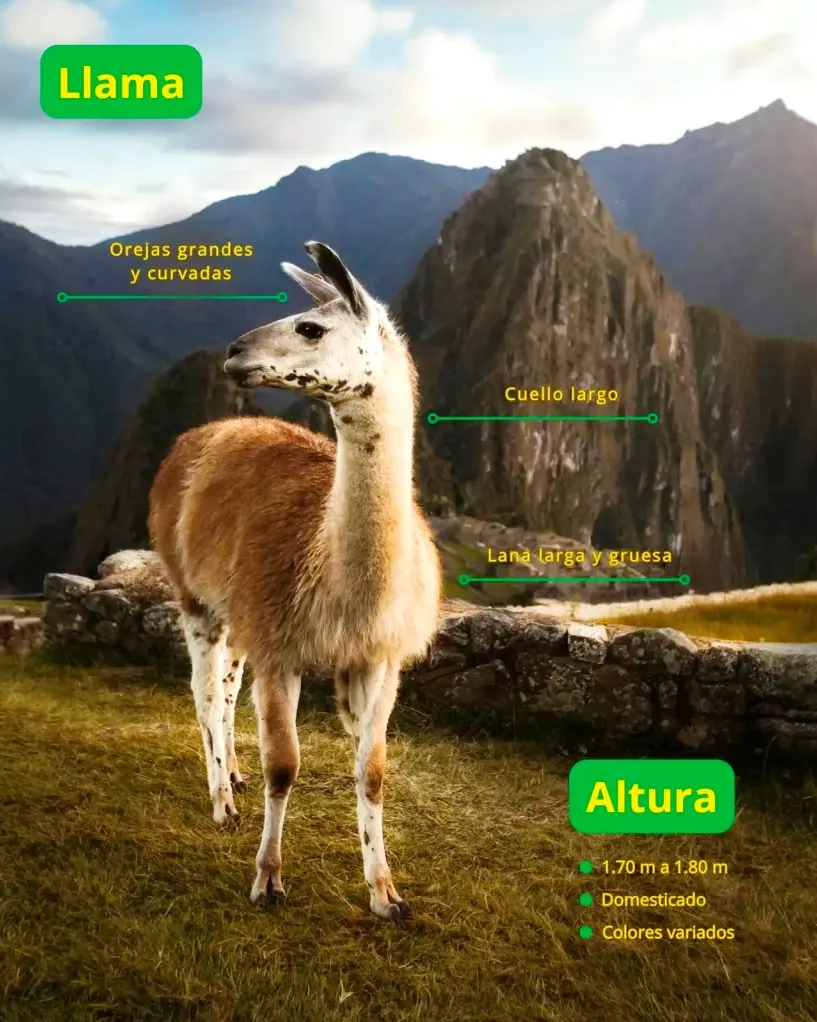
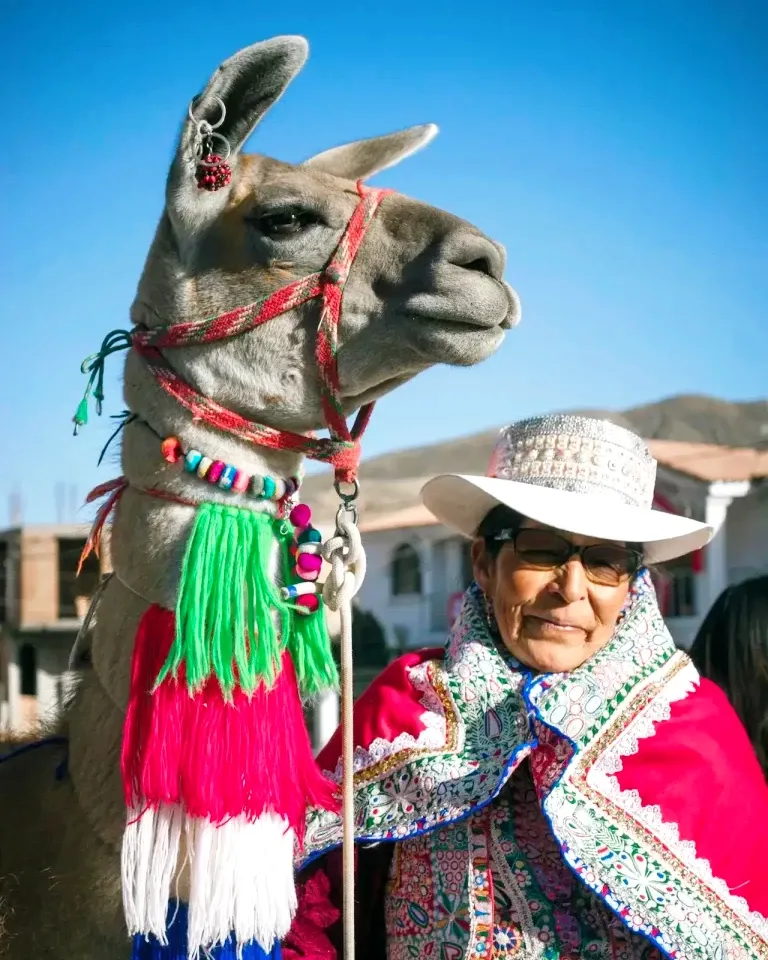
Characteristics: Llamas have a robust body and a long neck. Their face and ears are elongated, which is an essential distinguishing feature to differentiate them from alpacas. Their coat is dense and can vary in color, combining shades of brown, white, black, and gray.
Size: Llamas are the largest domesticated camelids, reaching a height of approximately 1.7 to 1.8 meters (5.7 to 5.9 feet) and a weight ranging from 115 to 180 kg (249.1 to 396.8 pounds).
Use: In addition to being used as pack animals, llama wool is prized for its softness and durability, and is used in textiles and outerwear.
Fiber: Llama fiber is coarser and less soft than alpaca fiber, but is still valued for its durability.
Behavior: Llamas are domesticated camelids used primarily as pack animals in the Andean mountain regions of South America. They are known for their independence and sometimes difficult temperament, although they can be trained to carry objects on long walks.
Why do llamas spit? You’ve probably seen those funny videos of a llama launching a surprise attack. However, it’s important to clarify that they don’t do this for fun: this is their way of defending themselves when they feel uncomfortable, threatened, or invaded. They use this as a last resort, but if you make them uncomfortable, be prepared for the famous spit! It’s always advisable to approach them with kindness and respect.
The Alpaca
With their soft fur and sweet gaze, alpacas stand out as one of the most iconic animals of the Andes. They are commonly found near Cusco, particularly on high-altitude trails such as Ausangate and Rainbow Mountain.
- Natural environment: High Andean zone (Peru, Bolivia).
- Height: 1.20 m to 1.5 m
- Domesticated.
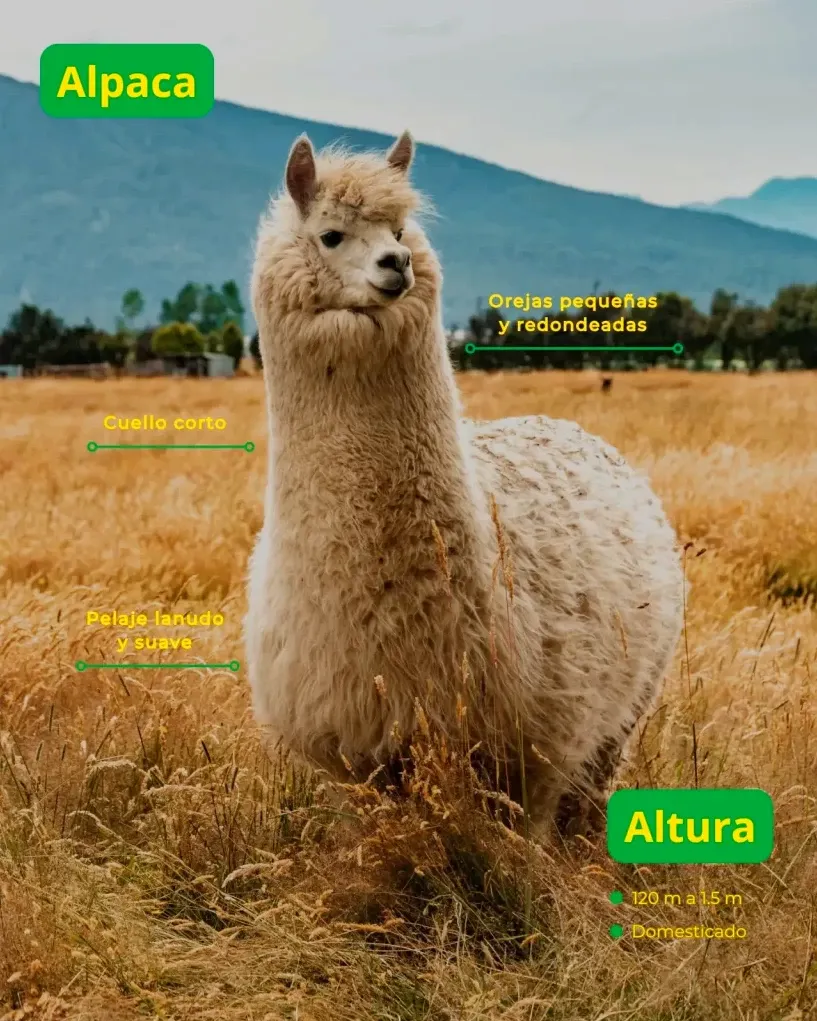
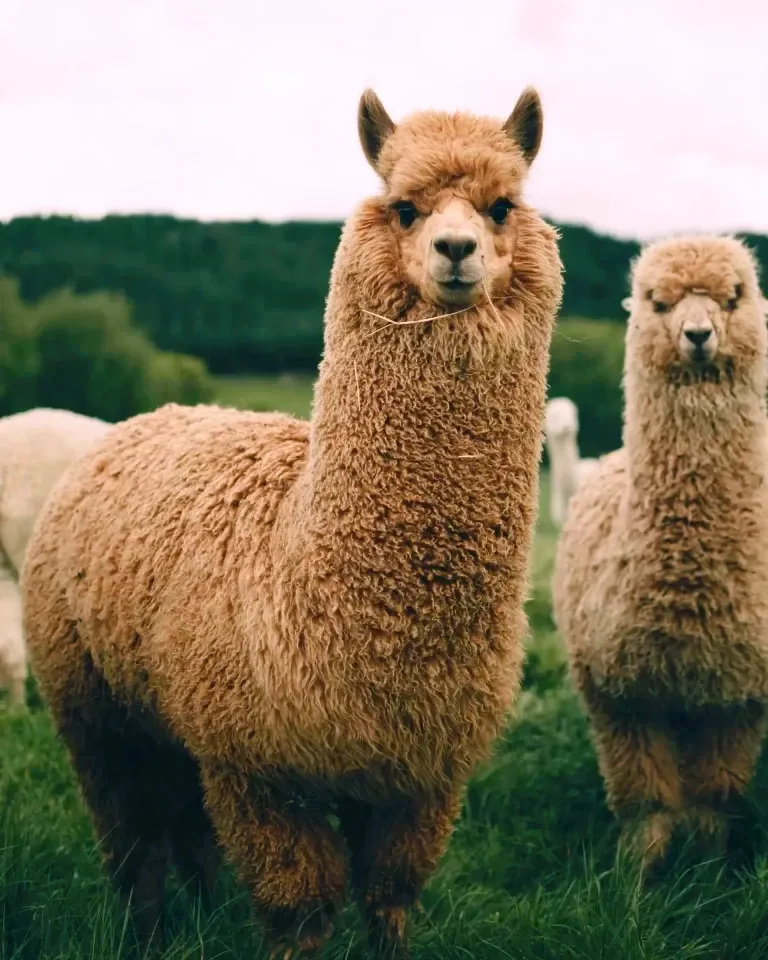
Alpacas have a compact body and a small, furry, rounded head, as well as their ears. Their fur is curly, fluffy, and extremely soft, and can vary in colors such as white, black, brown, and different shades of gray, usually in a single color with no combinations.
In terms of size, they are smaller than llamas, reaching between 1.20 and 1.50 meters in height and weighing between 50 and 85 kilograms.
Economically, alpacas are essential in rural areas, as their wool is considered one of the finest in the world, used to make high-quality textiles such as sweaters, scarves, blankets, and luxury garments.
Furthermore, their meat is prized for being rich in protein, low in fat, and low in cholesterol, making it a highly valued healthy option in Peruvian and Andean cuisine. Alpaca fiber is soft, warm, and light, with a range of natural colors reminiscent of autumnal hues.
The wool from the young alpacas, known as “baby alpaca” or “royal alpaca,” is the most sought-after for its softness and durability. Behaviorally, alpacas are domesticated animals, bred primarily for their high-quality wool. They are more docile than llamas and suitable for raising in larger herds due to their obedience.
The Vicuña
Unlike the llama and the alpaca, the vicuña and the guanaco are species of camelids that live in the wild. They are currently protected, and their hunting is prohibited by Peruvian law.
- Natural environment: Highland regions (Perú, Chile, Argentina, Bolivia, and Ecuador).
- Height: 1 m to 1.20 m
- Wild camelid and the smallest in South America.
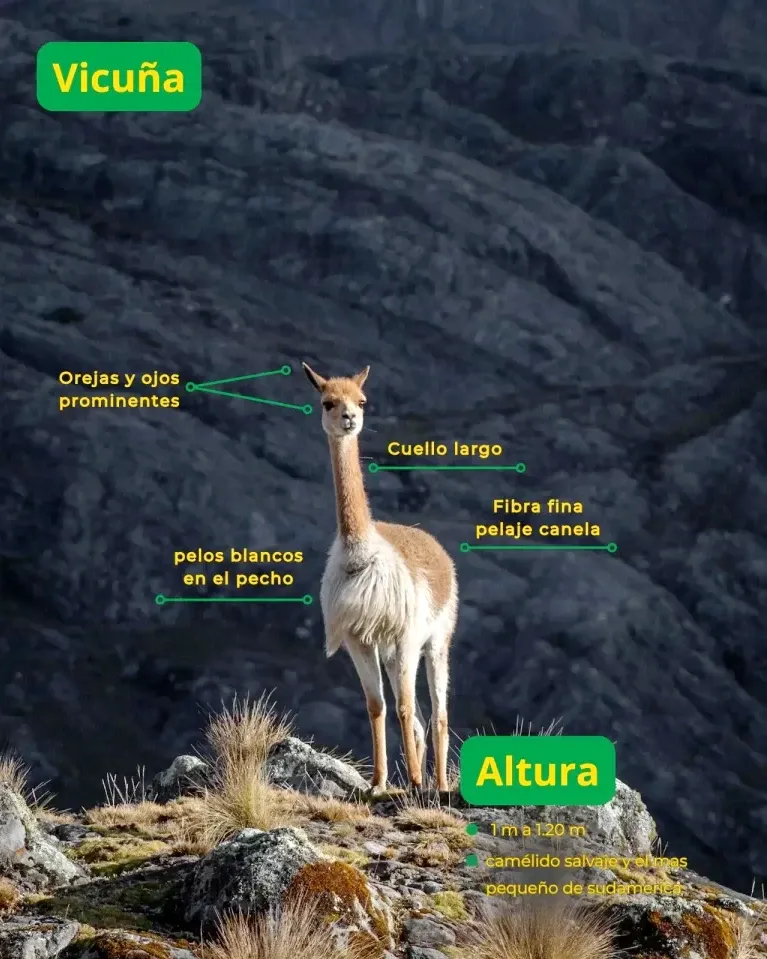
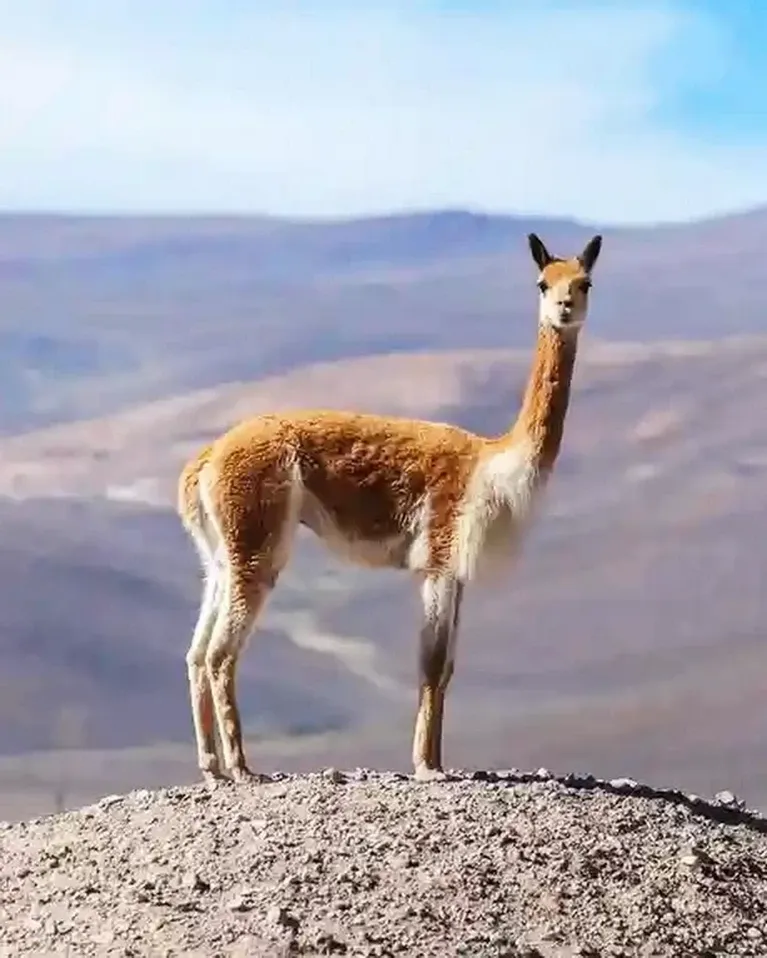
Appearance: Vicuñas are very delicate and elegant camelids, characterized by a slender body and long limbs. Their coat is long and soft, golden brown on top and white on the abdomen and face.
Size: These creatures are smaller than alpacas and llamas, reaching a height of approximately 1 to 1.20 meters and a weight ranging from 35 to 55 kilograms.
Use: Their main application is in the production of high-quality textiles, as vicuña wool is considered one of the finest fibers, making the products very expensive.
Fiber: Vicuña fiber is recognized as the finest in the world, being extremely luxurious and expensive. Thanks to regulations established by law and conservation efforts, the harvesting of their wool is carried out in a sustainable and controlled manner, limited to once a year.
Behavior: Vicuñas are wild animals that generally live in high-altitude areas of the Andes. They are very agile and fast, allowing them to quickly evade predators, making them difficult to spot.
The Guanaco
The guanaco, a wild relative of the llama, is an agile and elegant animal. It adapts perfectly to and camouflages itself in mountainous landscapes, and can be observed in the highest elevations of Peru.
- Natural environment: Arid and semi-desert regions (Peru, Chile, Argentina, Bolivia, and Paraguay).
- Height: 1.80 m to 1.90 m
- The largest and wildest camelid in South America.
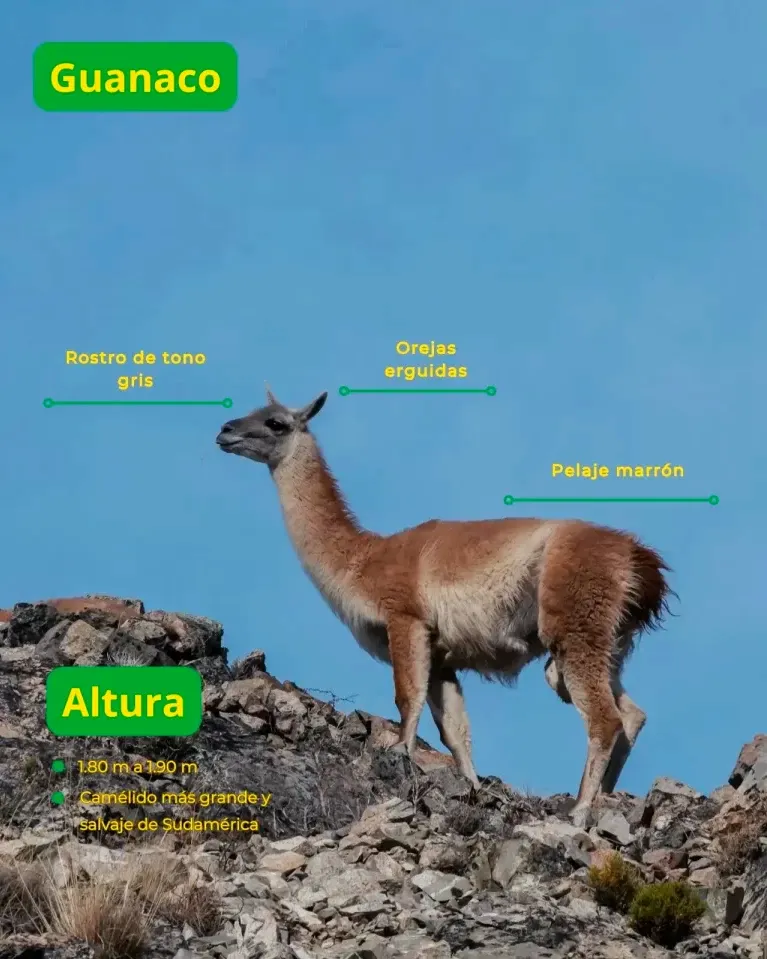
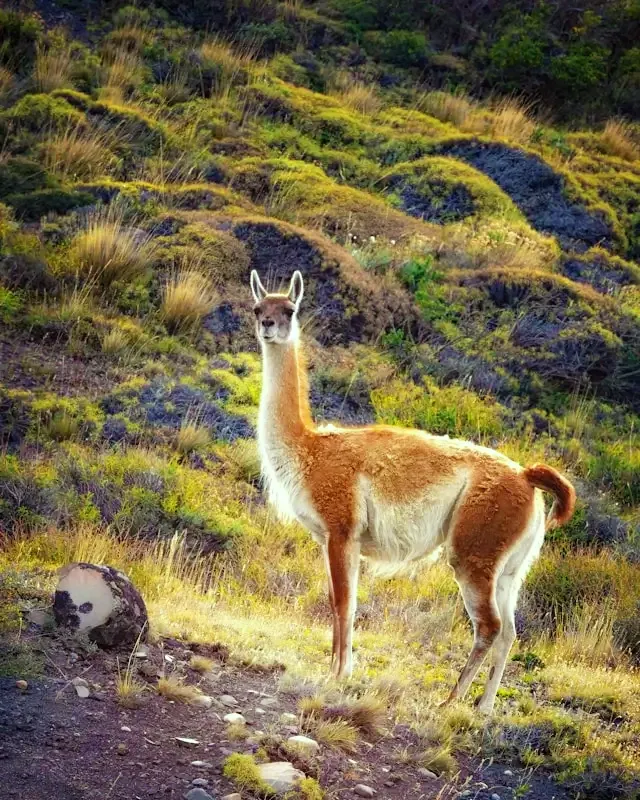
Guanacos are large animals, even larger than llamas, with a slender body and long legs. Their fur is short and coarse, light brown on the upper body and white on the abdomen.
The guanaco is the largest wild camelid in South America, reaching heights of between 1.80 and 1.90 meters and a weight ranging from 90 to 140 kilograms. Historically, their meat and skin were hunted, but are now protected by law.
Their fiber is used in the manufacture of rustic textiles, although production is limited and more expensive than that of other Andean animal wools. Guanaco fiber, although coarser than that of the alpaca and vicuña, is prized for its strength and durability.
These wild animals inhabit diverse ecosystems in South America, including mountains, plains, and deserts, and are known for their shyness, avoiding human contact.
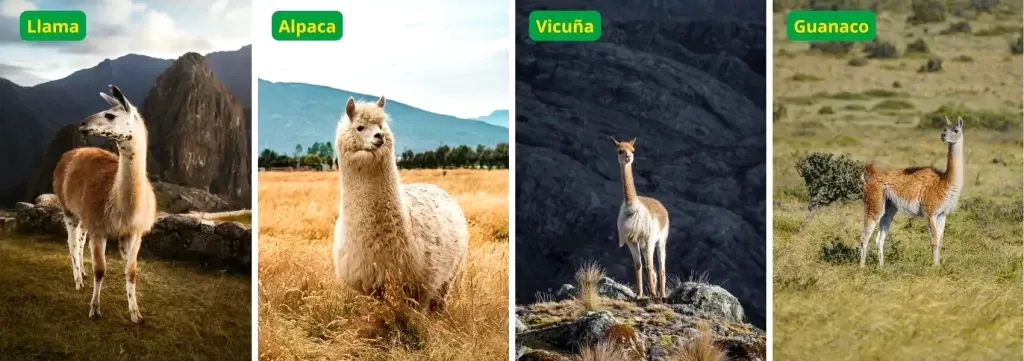
Distinctions between Llama, Alpaca, Vicuña and Guanaco
Below is a table showing the differences between llamas, alpacas, vicuñas, and guanacos, making them easy to identify quickly.
Llama | Alpaca | Vincuña | Guanaco | |
Body | Large with thick, multi-colored fur | Small with abundant curly single-color fur | Slim and tan with a white chest | Large, white-brown with a more arched neck |
Face | Long and large | Chubby and furry with round eyes | Small with a white snout. Promient eyes and eyelashes | Gray, large and long |
Ears | Long and pointed | Short and rounded | Small but pointed | Thin and erect |
Frequently Asked Questions
What is the difference between a llama and an alpaca?
Llamas are larger (up to 1.8 m) with long, banana-shaped ears and a coarser coat, and were bred as pack animals. Alpacas are smaller, with short spear-shaped ears and a soft, fluffy fleece prized for textiles.
Which camelid produces the most valuable fibre?
The vicuña. Its fleece is the finest and most expensive natural fibre in the world and, by law, can only be sheared once a year.
Are vicuñas and guanacos wild or domesticated?
Both are wild. The llama and the alpaca are the domesticated Andean camelids, while the vicuña and the guanaco live in the wild and are legally protected in Peru.
Where can I see them in Peru?
Llamas and alpacas are common around Cusco, Machu Picchu and on high-altitude treks such as Ausangate and Rainbow Mountain, while vicuñas and guanacos roam the high puna grasslands.