

 EN
EN ES
ES FR
FRThe Lares Trek crosses one of the most inhabited corners of the Peruvian Andes. Not inhabited by tourists, but by Quechua families who still herd alpacas, weave with natural dyes and live at altitudes where most visitors struggle to sleep.
That is the real difference between this route and the Classic Inca Trail. Lares is not an archaeological trek. It is a walk through working highlands that happens to end at Machu Picchu.
This guide covers the full picture: the route and its variations, how hard it actually is, when to go, what to pack, what the camps are like and how the days fit together. Reviewed August 2026.
Hiking in the Andean Highlands: Exploring the Lares Trek Route
The trek takes its name from the village of Lares, roughly a three-hour drive north of Cusco, sitting at around 3,250 metres and known for its thermal baths.
From there the trail climbs into a landscape of high pasture, glacial lakes and stone corrals, with snow peaks of the Urubamba range on the horizon for most of the walk.
Most itineraries cross one or two passes above 4,200 metres. The highest point on the common variants sits between roughly 4,400 and 4,600 metres, depending on which route your operator uses.
The walking ends in the Sacred Valley, usually at Ollantaytambo or Patacancha, from where the train runs to Aguas Calientes for the Machu Picchu visit.
Total walking distance is normally between 25 and 35 kilometres spread over three days, which sounds modest until you factor in the altitude.
Unlike the Inca Trail, the Lares route has no government-issued trekking permit and no daily quota, so it can be booked at short notice. The Machu Picchu entrance ticket is a separate matter and does need booking well ahead.
Why choose the Lares Trek instead of the Inca Trail
The most practical reason is availability. Inca Trail permits are capped and sell out months in advance; Lares does not work that way.
The second reason is solitude. On most days you will meet more shepherds than trekkers, which is rarely true on the classic route.
The third is the cultural side. The trail passes directly through communities such as Cuncani, Quishuarani, Huacahuasi and Patacancha, rather than skirting around them.
You also see more livestock than ruins: llamas and alpacas throughout, and with luck viscachas among the rocks or an Andean fox at dawn.
What you give up is the archaeology. There are no major Inca sites along the way and no Sun Gate arrival, so if walking into Machu Picchu through Inti Punku is the point of the trip, the Inca Trail is the honest answer.
Routes and variations: which Lares itinerary suits you
There is no single Lares Trek. Operators run several variants that share the same valley but differ in start point, number of passes and finish.
The four-day version is the most common and pairs three walking days with a fourth day at Machu Picchu. It normally starts near Lares and finishes at Patacancha or Ollantaytambo.
Three-day versions cut one camp and are more demanding per day, with longer stages and less margin for acclimatisation.
There is also a combined option that links Lares with the two-day Short Inca Trail, so you get both the highland communities and the Sun Gate arrival.
When comparing quotes, check three things: how many passes above 4,000 metres are included, where the trek actually ends, and whether the Machu Picchu ticket and train are in the price.
Lares Trek difficulty: altitude, terrain and daily distances
The difficulty of the Lares Trek is not technical. There is no scrambling, no exposure and no equipment beyond good boots. The challenge is altitude.
You spend most of the trek between 3,500 and 4,500 metres, and the passes are where people struggle. Breathing gets shallow, pace drops and headaches are common.
Daily walking is typically five to seven hours, with one long climb and one long descent. The descents are often harder on the knees than the climbs are on the lungs.
The single best preparation is not fitness but acclimatisation: two to three nights in Cusco or the Sacred Valley before you start makes a measurable difference.
Train with hills rather than flat distance, and if you can, walk with the pack you intend to carry.
Know the warning signs of altitude sickness: persistent headache, nausea, dizziness and breathlessness at rest. Mild symptoms are normal, but anything that worsens with rest means descending, not pushing on.
Trekking poles are worth the space. They take load off the knees on the long descents and help on loose ground after rain.
Best time to hike the Lares Trek
The dry season runs roughly from May to September and is the most reliable window: clear mornings, firm ground and the best mountain views.
The trade-off is cold. Night temperatures at the high camps regularly fall below freezing in June and July, which is exactly when the skies are clearest.
The wet season runs from around November to March. Trails turn muddy, afternoon rain is likely and cloud often hides the peaks, but the valley is at its greenest and there are far fewer people.
April and October are the shoulder months and often the best compromise: mostly stable weather, softer temperatures and lower prices.
Whatever the season, expect all four of them in a single day. Sun at midday and frost at night is normal at this altitude.
What to pack and what the camps are really like
On an organised trek, porters or pack animals carry the camp and a duffel with your main gear. You walk with a daypack holding water, layers, sun protection and camera.
The layering system matters more than any single garment: a base layer, a fleece, a windproof shell and a warm jacket for the evenings.
Bring a sleeping bag rated to at least minus ten degrees Celsius, or rent one properly rated. This is the item people most often get wrong.
Sun protection is not optional at this altitude: high-factor sunscreen, lip balm, sunglasses and a brimmed hat. The UV index is severe even when the air feels cold.
Other essentials: refillable water bottle, headtorch, basic first aid, blister plasters, personal medication and small notes in soles for buying textiles directly from weavers.
Camps are simple. Tents are pitched near the communities, meals are cooked fresh by the trek chef, and toilets are portable or basic. There is no electricity and no signal for most of the route.
Water comes from streams and is boiled or treated by the crew. Carry your own bottle rather than relying on plastic, and take every piece of rubbish out with you.
Cultural encounters: Meeting Andean Communities along the way
The villages along the Lares valley are not set up for visitors. People are working: herding, weaving, digging potatoes, carrying water. That is precisely what makes the crossing worthwhile.
Quechua is the first language here and Spanish often the second, so a guide who speaks Quechua changes the quality of every encounter you have.
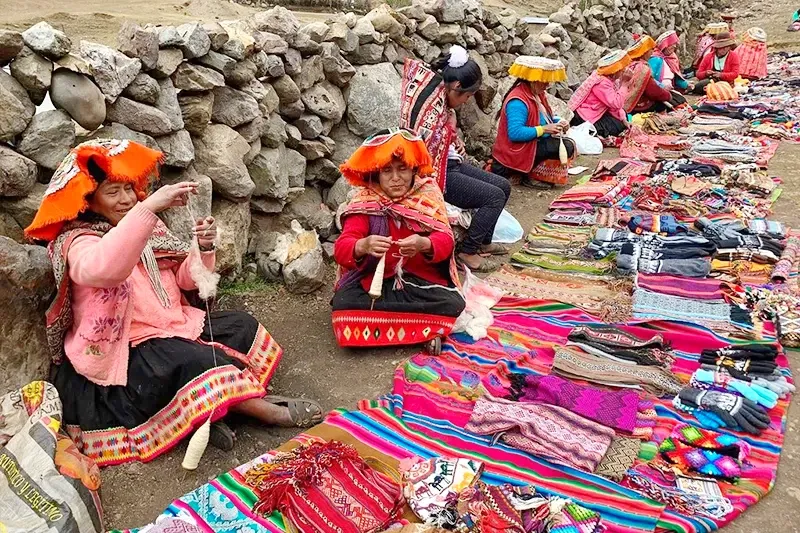
Weaving is the visible craft. Patterns identify the community, and the dyes come from plants, minerals and cochineal rather than a bottle.
Buying a textile directly from the woman who made it is the most useful thing a trekker can do here, and it costs less than the same piece in a Cusco shop.
Potatoes are the backbone of the diet, with dozens of local varieties, alongside quinoa, maize and freeze-dried chuno.
Pachamama, the earth, is treated as an active presence rather than a metaphor. Offerings before a journey or a harvest are routine, not folklore.
Two courtesies matter: ask before photographing anyone, and bring fruit, bread or school supplies rather than sweets or money if you want to give something.
Highlights you should not miss
The thermal baths at Lares, right at the start, are a genuine hot spring and a good way to loosen up before the first climb.
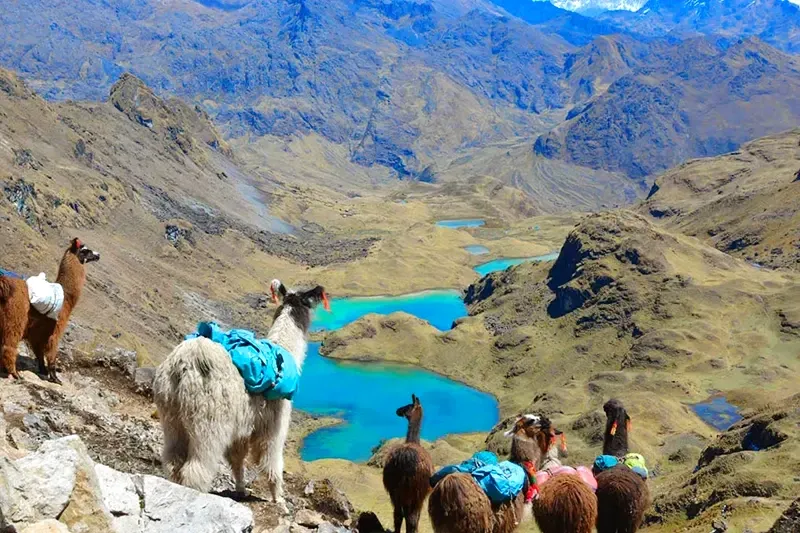
The turquoise lakes below the passes are the visual highlight of the trek, especially in the first light before the wind picks up.
Crossing the highest pass is the moment most people remember, both for the effort and for the view back over the valley.
The weaving villages, where you can watch the whole process from raw fleece to finished cloth, are the cultural highlight.
And the descent into the Sacred Valley, where the landscape changes from bare highland to cultivated terraces in the space of a few hours, closes the walk well.
Natural wonders of the Lares Valley: Beauty beyond the highlands
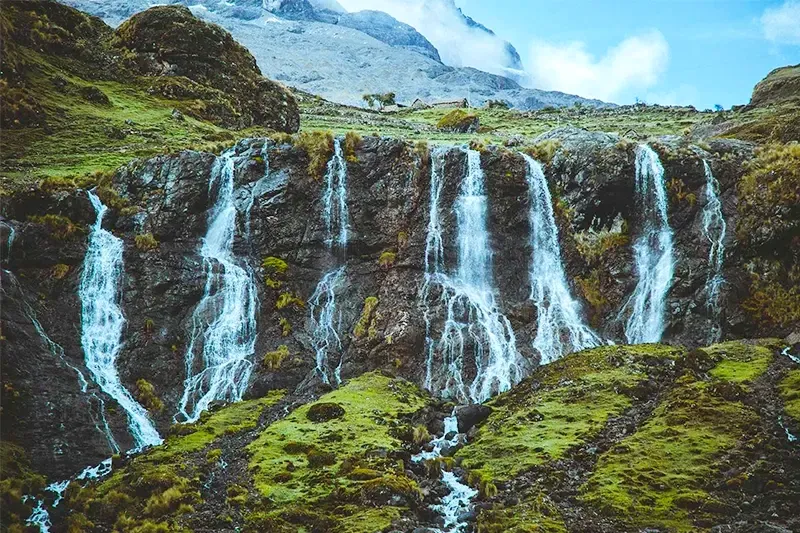
The Lares valley sits under the Urubamba range, and its glaciers feed everything below: the lakes, the streams and the pasture the herds depend on.
The high-altitude lakes are the signature landscape. Their colour shifts from steel grey to deep turquoise depending on the light and the mineral load of the meltwater.
Above roughly 4,000 metres the vegetation thins to ichu grass and cushion plants, with queuna woodland surviving in sheltered folds.
Birdlife is better than most trekkers expect: Andean geese on the lakes, caracaras over the pasture and, if you are lucky, a condor riding the thermals.
Lower down, the trail drops towards cloud forest edges where orchids and bromeliads appear and the air suddenly feels thicker.
The valley is inhabited rather than protected, so the landscape you walk through is a working one shaped by centuries of grazing and terracing.
Planning your itinerary: how the days fit together
A typical four-day plan looks like this: transfer from Cusco to Lares with the hot springs, then walk to the first camp near a lake.
Day two is the hardest: the main pass, followed by a long descent to a community camp, with weaving demonstrations often in the afternoon.
Day three is shorter, finishing the walk in the Sacred Valley and continuing by train to Aguas Calientes, where you sleep in a hotel rather than a tent.
Day four is Machu Picchu, with an early bus up, a guided visit and the return train to Ollantaytambo and Cusco.
Build in at least two nights in Cusco before day one. It is the single most effective thing you can do for the trek to go well.
Book the Machu Picchu entrance and any Huayna Picchu ticket as far ahead as possible; unlike the trek itself, those quotas do sell out.
Frequently asked questions about the Lares Trek
Do I need a permit? No. The Lares Trek requires no trekking permit and has no daily quota, which is why it can be arranged at short notice. Your Machu Picchu entrance ticket is separate and must be booked in advance.
How fit do I need to be? Regular walkers with no altitude problems manage it comfortably. The limiting factor is acclimatisation, not speed.
How high does it go? Between roughly 4,400 and 4,600 metres at the highest pass, depending on the variant. Confirm the exact figure with your operator.
Is it suitable for children or older trekkers? Yes, with the right pacing and a horse available. Families do it regularly, more often on the three-day version.
Do I sleep in a tent every night? No. The last night is normally in a hotel in Aguas Calientes before the Machu Picchu visit.
Is there phone signal? Patchy at best and absent for most of the route. Tell people at home before you start.
Can I combine it with the Inca Trail? Yes. A combined itinerary links Lares with the two-day Short Inca Trail so you also arrive through the Sun Gate.