

 EN
EN ES
ES FR
FRPatabamba - Huchuy Qosqo - Machu Picchu 2 days; This trek is ideal for those passengers who really want to be far in the middle of nowhere with only nature surrounding them as they camp in an area that is scarcely seen by tourists. Huchuy Qosqo (small Cusco) is situated above the Valley of Urubamba and offers very spectacular views over the mountain range Cordillera de Vilcanota.
You will start your trek in Tauca, located on the main road Cuzco-Chinchero-Urubamba. And also Tauca is the place where you will meet your kit and crew thereafter you will head northeast and walk for a total of 6 hours (12 km).
Overview - Patabamba Huchuy Qosqo Machu Picchu 2 days
Day 1: Cusco- Patabamba - HuchuyQosqo - Lamay - Machu Picchu Town
- Hotel pickup at 6:00 AM in Cusco and drive to the community of Patabamba (3’700m / 12.139 ft.)
- Walk an ancient Inca trail along a canyon to Huchy Qosqo archaeological complex ( 3,400m/ 11,154 ft)
- Take time to explore the site and discover more about the history of the Incas
- Descend walking downhill to Lamay village in the Sacred Valley
- Our private vehicle will take you to Ollantaytambo
- Board the train to Aguas Calientes
- Check into your hotel and rest
Time of bus trip: 1.30 hours
Hiking time: 5-6 hours
Weather: Cold climate.
Day 2: Aguas Calientes – Machu Picchu – Cusco
- Wake up early to catch the bus to Machu Picchu (2400m / 7874f)
- Enjoy a 2 hour guided tour
- Explore the ruins on your own
- Return to Aguas Caliente for lunch
- Board the train to return to Cusco
Time of bus trip: 1 hours
Hiking time: 2-3 hours
Weather: The climate in Machu Picchu is warm with mosquitoes.
Itinerary – Two Days Patabamba Huchuy Qosqo Machu Picchu
Day 1: Cusco- Patabamba - HuchuyQosqo - Lamay - Machupicchu Town
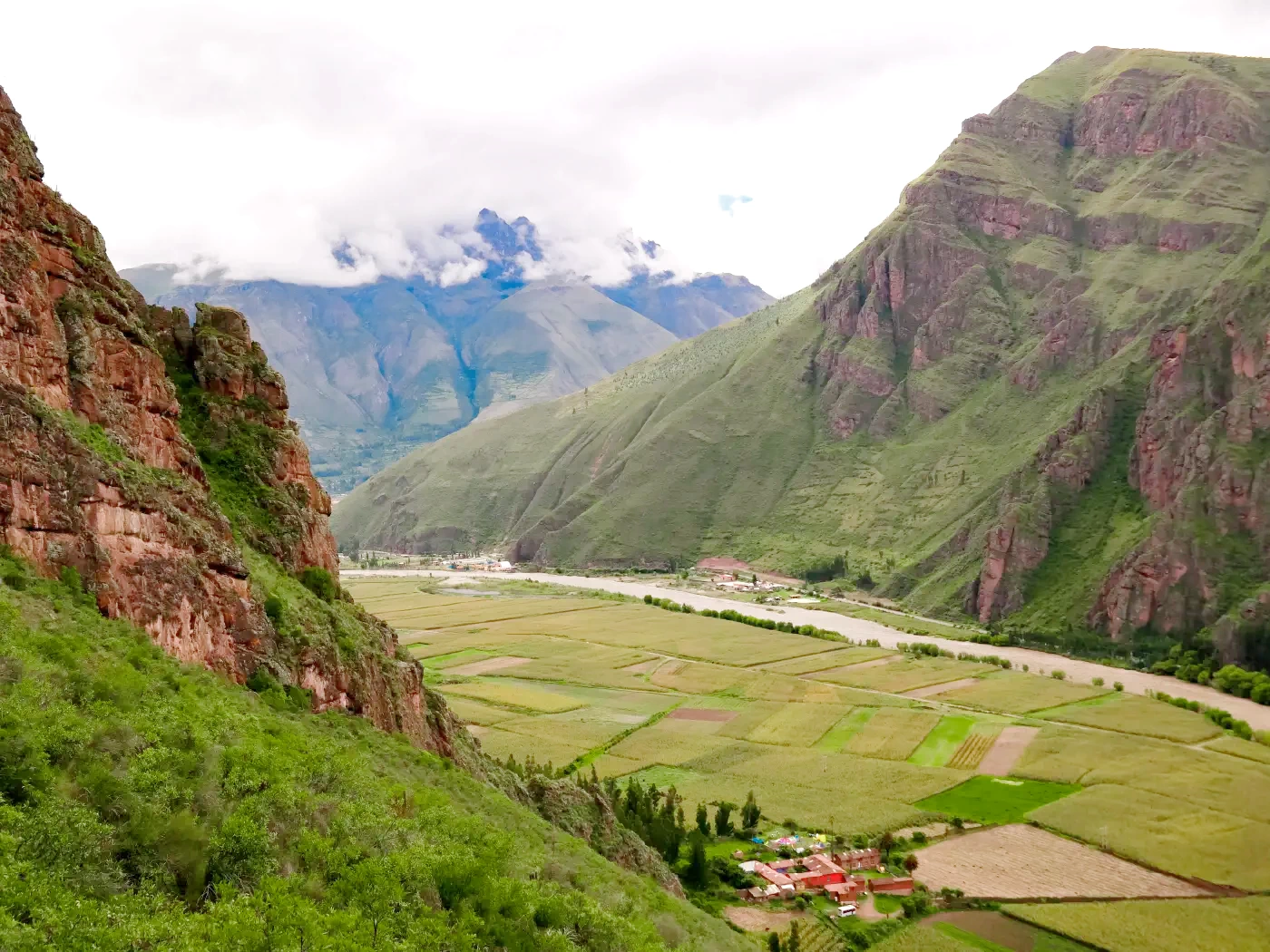
At 06:00 am, our vehicle will pick you from the hotel and drive to the community of Patabamba (3’700m / 12.139 ft.) an hour and a half from Cusco. Patabamba is a small town located 600 feet above the Urubamba River, a natural formation that lets you see and enjoy the spectacular canyon view and on the other side of the valley the ruins and the town of Pisac.
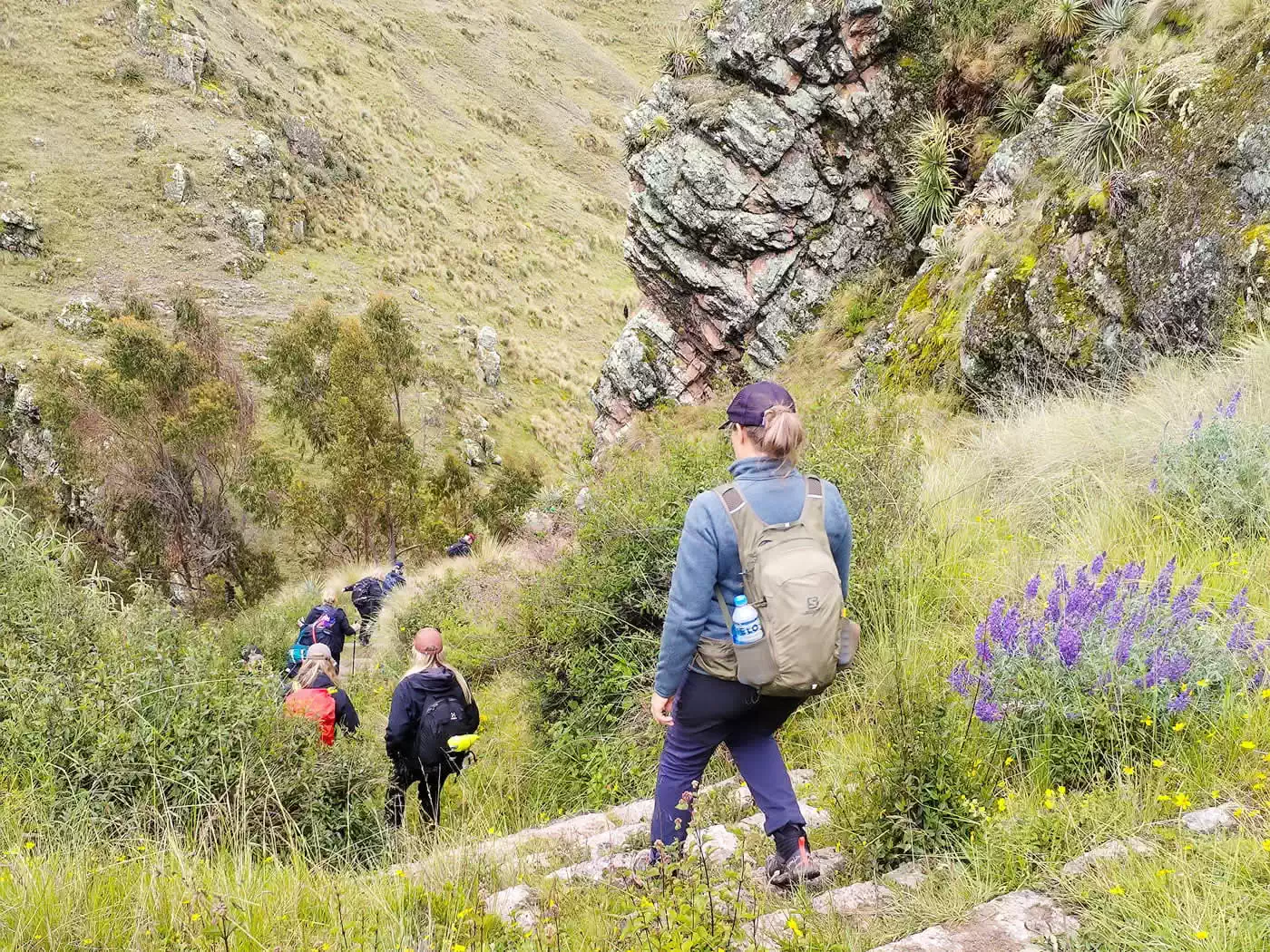
This is where you start walking for 6 hours by an ancient Inca trail following the left side of the canyon to the Archaeological Complex of Huchuy Qosqo (3’400m / 11.154 ft.). This road has been built to high altitude and is distinguished by always being above the Urubamba River valley. We will travel through farming communities and watch for the Cordillera Urubamba with its beautiful snow-capped peaks on the horizon.
We will have time to explore Huchuy Qosqo before walking downhill to Lamay village located in the Sacred Valley. Where our private vehicle will be waiting to take us to Ollantaytambo. Here you will take the train to Aguas Calientes, and spend the night in a hotel.
Time of bus trip: 1.30 hours
Hiking time: 5-6 hours
Weather: cold climate.
Day 2: Aguas Calientes – Machu Picchu – Cusco
It is recommend to visit the lost city of the Incas early in the morning. You will leave for the historical sanctuary of Machu Picchu (2400m / 7874f) early by bus. There you will get a guided tour, explaining agriculture, astronomy, and religion in ancient Machu Picchu.
After everyone will have enough time to go to Aguas calientes and enjoy lunch before taking the train to return to Cusco.
Time of bus trip: 1 hours
Hiking time: 2-3 hours
Weather: The climate in Machu Picchu is warm with mosquitoes.
Inclusions – Everything Arranged for a Smooth Short Trek
Includes:
- Transportation, to and from your hotel
- Round trip Expedition class train tickets from Ollantaytambo to Aguas Calientes
- Meals 1 breakfast, 1 lunch and 1 dinner (vegetarian or celiac option available)
- Professional bilingual guide (Spanish and English)
- Entrance fees to Huchuy Qosqo
- Entrance fees to Machu Picchu
- Bus goes up from Aguas Calientes to Machu Picchu
- Hotel in Aguas Calientes
- First aid including emergency oxygen bottle
Not Included:
- Meals not specified in each itinerary day
- Bus down from Aguas Calientes to Machu Picchu
- Optional tips
- Travel insurance.
Notes:
- Visit to Huayna Picchu: For Huayna Picchu mountain requires to be booked far in advance however we charge additional $ 70.00 USD and then we will guarantee your entrance for Huayna Picchu as well (This new State law began since the 18th of July 2018).
Packing List – Essentials for a Short Andean Hike
What do I need to bring?
- Small backpack with rain shelter (30 or 40 litters is well enough).
- Clothing for warm and cold climate like a waterproof jacket.
- Trekking shoes.
- Slippers or sandals (for showers and hot springs).
- Woolen or synthetic socks and a sweater.
- Long- and short-sleeved polo’s/T-Shirts.
- Rain poncho and a hat.
- Bathing suit (for the hot springs in Aguas Calientes).
- Sunscreen, insect repellent, disinfecting alcohol and gel and toilet paper.
- Camera (wrapped in plastic bag), a flash light and batteries.
- Some snacks like chocolate bars and dry fruit.
- Original passport, original ISIC student card (In case you are student) and extra money in soles.
Hotels – Comfortable Stays Along the Route
To begin, we'd like to suggest some accommodation options in Cusco. Although it's a small city, there are increasingly more pedestrian streets where vehicular traffic is restricted. This situation makes transfers and pick-ups more difficult, so we recommend taking precautions.
Xtreme Tourbulencia has selected comfortable hotels that facilitate transfers and pick-ups for our tours. These are just suggestions.
PRICE - Patabamba - Huchuy Qosqo - Machu Picchu Trek 2 Day
In order for us to embark on the Patabamba - Huchuy Qosqo - Machu Picchu Trek 2 Day, we have to review availability for your departure date and have a clear start date in order to enjoy our hike. At this moment, Xtreme Tourbulencia requires a minimum of two people in order to confirm a start date. If you are a solo traveler, please consult us for available departure dates.
REGULAR PROGRAMMING:
| REGULAR PROGRAMMING | WITH 3 STAR HOTEL |
| Price | $??? USD |
Optional Add Ons
a) 4 Star Hotel: Enjoy a more pleasant night in comfort Hotel Tierra Viva or Casa Andina depending on availability for $40 USD additional per person.
b) Train Upgrades: Vistadome observatory train is available for $40 each way, which allows you to enjoy panoramic windows, snacks, and dances making your train journey more pleasant.
c) Entrance Fees and Permits: Huayna Picchu or Machu Picchu Mountain: Has an additional cost of $70 USD, only for the entrance and does not include train service.
d) Private Group Tour Service: Hike at your own rhythm with your group.
Terms & Conditions
a) Please note that the program deposit is non-refundable.
b) The deposit is used to purchase the ticket entrance to Machu Picchu and also for booking the train ticket and hostels. Once a space is purchased it cannot be resold.
c) XTreme Tourbulencia will not give any refunds if a participant decides to cancel the trip prior to departure or during the trip (except for the entrances to the archaeological sites and the bus/train tickets)
d) If Xtreme Tourbulencia does not confirm the reservation, your total payment will be refunded totally.
e) All participants must carry their own daily backpack of 30 liters
f) A participant must declare if they have any sickness or medical condition and must bring their own medicines.
g) All participants must bring their original passport and, if available, their original student card "ISIC".
FAQs – Common Questions About the Huchuy Qosqo Route
What is the Patabamba to Huchuy Qosqo and Machu Picchu trek?
It is an exciting 2-day alternative adventure that combines an off-the-beaten-path hike through high Andean communities, the historical archaeological site of Huchuy Qosqo (Little Cusco), a scenic train ride to Aguas Calientes, and a guided tour of the world wonder, Machu Picchu.
How long is the hiking portion of the trek?
On Day 1, you will hike for approximately 5 to 7 hours (around 12 to 14 km / 7.5 to 8.7 miles) starting from Patabamba/Qoricocha Lake up to the high pass, past Pucamarca, down to Huchuy Qosqo, and finishing in Lamay. Day 2 is dedicated entirely to exploring Machu Picchu with minimal walking.
What is the maximum altitude reached during this trek?
The highest point of the trek is the Apachete Pass, which sits at approximately 4,200 meters (13,780 feet) above sea level.
How difficult is the trek? Is it suitable for beginners?
The trek is classified as moderate. While it does not require technical mountaineering skills, it does involve a steep ascent to a high altitude pass. It is suitable for people with a moderate level of physical fitness who exercise regularly.
Do I need to acclimatize before doing this trek?
Yes, altitude acclimatization is crucial. We strongly recommend spending at least 2 to 3 days in Cusco (3,350m / 11,047ft) or the Sacred Valley prior to the departure date to let your body adjust and minimize the risk of altitude sickness.
Where does the trek officially start?
The trip begins with an early morning private vehicle pickup from your hotel in Cusco, driving you to the highland community of Patabamba and near Qoricocha Lake, where the trail starts.
What are the main highlights of the Huchuy Qosqo route?
Key highlights include breathtaking panoramic views of the Sacred Valley, walking along authentic original Inca trails, passing through traditional Andean farming villages, exploring the striking Puma Punku canyon, discovering the cliffside royal estate ruins of Huchuy Qosqo, and finally visiting Machu Picchu.
Do I need a special permit for Huchuy Qosqo, like the Classic Inca Trail?
No, the Huchuy Qosqo trek does not require the heavily restricted permits that the Classic Inca Trail does. However, advance booking is still mandatory because train tickets and Machu Picchu entrance slots are strictly limited and sell out quickly.
What kind of accommodation is included on Day 1 night?
After finishing the hike on Day 1, you will take a private transfer to Ollantaytambo and board a train to Aguas Calientes (Machu Picchu Pueblo), where you will spend the night in a comfortable, private hotel room with an en-suite bathroom.
What meals are included during the 2 days?
Generally, the package includes:
Day 1: A box lunch (or picnic lunch) on the trail and a dinner in Aguas Calientes.
Day 2: Breakfast at your hotel in Aguas Calientes. (Breakfast on Day 1 and lunch on Day 2 in Machu Picchu/Aguas Calientes are usually excluded so you can choose your restaurant preference).
What should I pack in my daypack for the hike?
You should carry a lightweight daypack (around 20–30 liters) containing: a waterproof jacket/poncho, layers of warm clothing (temperatures drop drastically at high passes), sturdy worn-in hiking boots, sunscreen, a sun hat, sunglasses, insect repellent, personal medication, a reusable water bottle, snacks, and your original passport.
Do I need to bring my original passport?
Yes, absolutely. You must bring your physical, valid original passport (the exact same document number used to book your tour). It is checked at train stations, park control checkpoints, and the entrance of Machu Picchu.
What is the weather like on the Patabamba – Huchuy Qosqo route?
The weather varies by microclimate. Days are generally warm and sunny when clear, but high-altitude mountain passes can be windy and freezing. Nights can drop below freezing. Rain is common from November to April (wet season), while May to October is dry and sunny.
Can I hire an extra horse or porter for my heavy gear?
Yes. While tour operators typically provide transport logistics, you can arrange extra support or rent walking poles and saddle horses through your agency during the booking process if you prefer assistance along the steep ascents.
How do we get from Huchuy Qosqo down to the Sacred Valley?
After exploring the Huchuy Qosqo archaeological complex, you will hike downhill for about 2 hours along a steep zigzag path into the traditional village of Lamay sitting by the Urubamba River. A private driver will meet you there.
How do we reach Machu Picchu on Day 2?
Early in the morning on Day 2, you will board the round-trip tourist shuttle bus from Aguas Calientes up to the main entrance gate of the Machu Picchu Citadel, which takes about 30 minutes.
Is a guided tour of Machu Picchu included?
Yes, a professional English-speaking guide will lead you on a comprehensive 2-hour walking tour of the citadel, explaining its history, architecture, and significance, followed by free time to explore on your own depending on your entry circuit ticket.
Can I climb Huayna Picchu or Machu Picchu Mountain?
Yes, you can add an extra hike like Huayna Picchu or Machu Picchu Mountain, but it requires a separate, advance permit and incurs an additional fee. Because spaces are strictly limited, you must request this upgrade at the time of booking.
How do we return to Cusco at the end of the trip?
After wrapping up your time in Machu Picchu and returning by bus to Aguas Calientes, you will board the return expedition train to Ollantaytambo or Poroy station. From there, a private van or bus provided by your tour operator will transfer you safely back to your hotel in Cusco late in the evening.
What is the cancellation or modification policy?
Because train companies (PeruRail/Inca Rail) and the Ministry of Culture (Machu Picchu tickets) enforce strict, non-refundable, and non-transferable policies once booked, most tour operators have specific cancellation terms. It is highly recommended to purchase comprehensive travel insurance that covers unexpected trip interruptions or medical emergencies.
Travel Information.
Briefings
All briefings are done at our office at 5:00 PM one or two nights before your trek. If you are unable to make this time, you need to coordinate another time with a member of the Xtreme Tourbulencia office team.
Briefings are approximately 40 minutes long.
Pickups
Xtreme Tourbulencia is one of the only companies to pick you up directly from your hotel. As long as your hotel is in the center of Cusco city, we will coordinate this pickup based on a time that your guide will discuss at the briefing. Pick up times may vary 30 – 45 minutes based on traffic conditions and previous pickups.
Cusco is an old city with cobblestoned streets and very narrow passageways. Smaller hotels and Airbnbs are often located on streets that cars can´t pass through. They also are frequently on hillsides with long steep climbs, making it difficult to carry luggage. We highly recommend that you book accommodations with better access.
Huayna Picchu / Machu Picchu Mountain
Machu Picchu is most beautiful when seen from above, which is why hiking one of the mountains next to the ruins is very popular to do after your tour.
Huayna Picchu is the most popular and must be booked in advance since it sells out very quickly. This hike takes approximately 1 hour to the top, and another 45 minutes back down. Tickets are sold in time sessions stating when you can start this hike.
The first session is from 7-8 AM, and the 2nd session is from 10-11 AM. Again, this refers to the time-frame when you can start your hike. We usually book the second session so you can enjoy your tour with your guide first. You will do this hike on your own, but your guide will show you where to begin.
Machu Picchu Mountain is a bit longer and a bit less popular. It takes 2 hours to the top and another 1 hours to the bottom. Again there are two time windows – from 7-8 AM and 9-10 AM and we usually purchase the second time window. 4 Day treks, the Trekkers CAN NOT do this hike and enjoy a tour of the ruins. Time will not allow for this.
Hiking either mountain will allow you to have some extra time at the ruins once you complete, as listed above.
Machu Picchu Entrance Times
Schedules (*) | Peak Season: Arrival Policy (**) | Low Season: Arrival Policy (**) |
06:00 am | Until 06:30 am | Until 06:45 am |
07:00 am | Until 07:30 am | Until 07:45 am |
08:00 am | Until 08:30 am | Until 08:45 am |
09:00 am | Until 09:30 am | Until 09:45 am |
10:00 am | Until 10:30 am | Until 10:45 am |
11:00 am | Until 11:30 am | Until 11:45 am |
12:00 pm | Until 12:30 pm | Until 12:45 pm |
01:00 pm | Until 01:30 pm | Until 01:45 pm |
02:00 pm | Until 02:30 pm | Until 02:45 pm |
03:00 pm | Until 03:30 pm | Until 03:45 pm |
Health Concerns
We request you be honest with your guide about any health conditions or concerns you might have. While our guides are not medical professionals, they do have first-aid training. We also work with a clinic in Cusco that can help assist our team.
You are responsible for assessing whether the Inca Trail to Machu Picchu is suitable for you. We recommend you to consult your physician to confirm your fitness for travel and participation in any planned activities. You should seek your physician’s advice on vaccinations and medical precautions.
Xtreme Tourbulencia will not provide medical advice. It is your responsibility to assess the risks and requirements of each aspect of the Tour based on your unique circumstances, limitations, fitness level, and medical requirements.
If you develop extreme altitude sickness or any other illness that prevents you from hiking, and you still wish to visit Machu Picchu by train, we will work with you to coordinate this trip. Since this will be a new trip, it may require additional fees. We will use as much of the original itinerary to keep costs low.
If you experience issues while hiking and can not continue, a porter will accompany you to the closest road and wait while a car comes to pick you up and bring you to the nearest health clinic.
Group Tours
Group tours are made up of all different types of people, with various hiking skills and ages. By agreeing to a group tour, you agree that some people might be slower or faster than you are.
Everyone can go at their own pace for the trek, and the guide will work with the group to spend time with everyone. Groups might request some modifications to the tour, and the guide will work with everyone to make the best decision for the group.
Strikes
Unfortunately, strikes are frequent in Peru and can disrupt our tours. Roads are often blocked, and trains stopped. We will make sure your trek continues as planned, even if that means leaving the night before your start date.
Under these circumstances, tours might need to be canceled. But our operations department will coordinate with you in this situation. Your safety is always our top concern and will dictate how we decide.
Lost Items
You are responsible for your items throughout the tour. Please be diligent about where you leave your things and remember to remove all items from our vans, your tents, restaurant, etc.
Do not leave anything unintended during your hike. Other trekkers or teams might pick it up not knowing whose it is.
Tips
Tipping is part of the tradition of any trek to Machu Picchu. While we pay good wages to our entire team, anything extra is always appreciated. Please know that this is not obligatory and that you should never feel pressured into this.
Typically the participants in a group pool their tipping money together for the porters and chef. The amount recommended is different per trek and listed below.
For the guide, this is more personal and needs to be decided based on your relationship with them and done separately from the group. Porters and Chefs prefer soles if possible. Guides are happy with U.S. dollars, Peruvian Soles, or even your credit card.
Travel Insurance
Travel insurance is inexpensive and strongly recommended. With trips being planned months ahead of time, you never can predict what could happen. Adventure travel includes more risk than the average trip.
Insurance is a way to protect the investment you have made on this journey. We can help recommend an agent to walk you through this type of insurance if needed.
Altitude Sickness
As soon as people book their trip to Peru, specifically Cusco, they start wondering about altitude sickness. The air at high altitudes contains less oxygen than at sea level and forces your body to work harder to get the oxygen it needs.
Over several days at high altitude, your body adjusts to the lower amount of oxygen in the air. For this reason, we always recommend spending at least two days in Cusco before beginning any trek in the Andes. Cusco is a marvelous city with lots to do, so if you have more time to acclimate you won´t be bored.
With altitude sickness, you may first feel like you have the flu or a hangover. You may have a headache, tiredness, loss of appetite, nausea or vomiting, dizziness, trouble sleeping, trouble breathing during exercise. If any of these effects become severe, please contact our office, and we will help you get to a doctor.
Inca Trail Altitude Sickness:
Most of the time, these symptoms will be mild. We always recommend easing into activity slowly, allowing your body to adjust. Drink plenty of fluids such as water or coca tea. Coca tea has been used since ancient times to help prevent altitude sickness.
Leaves from the Coca Plant contain alkaloids that help bring oxygen into your blood, helping your body avoid the effects of altitude sickness. Avoid drinking a lot of alcohol and coffee. They will cause you to urinate more often and become dehydrated. Avoid smoking. Smoking makes it more difficult for your body to get oxygen. Avoid sleeping pills. They may cause shallow breathing at night, making it more difficult for your body to absorb oxygen while you sleep.
Remember the trek to Machu Picchu is not a race. Even those in the best shape will suffer from altitude sickness if they race to the top of the mountain too quickly. Go slow, and it will give your body time to adjust to the elevation.
Your healthcare provider may prescribe medications, such as acetazolamide and dexamethasone, to help prevent altitude sickness. Start the medicine two days before you get to a high altitude. Continue to take it while you are at high altitude.
You must remember that this is your holiday and you do not want to stress out about the possibility of getting sick from the mountains. Do everything slowly and drink lots of water, and enjoy the coca tea. If anything does happen and you, unfortunately, get sick, let your guide know right away. Xtreme Tourbulencia guides are trained to help you get through it.
Weather
Of course, the weather is unpredictable. Typically the dry season in Cusco is from April through October, but this does not stop rain from falling in June or the sun from coming out in December so just be prepared.
No matter what month you are doing the trek, make sure that you have rain gear that includes a waterproof jacket, pants, poncho, and waterproof gloves. Many people forget about gloves, but being cold and wet makes hiking very unpleasant.
Also, prepare for four seasons. Several of the treks through the Andes involve various microclimates and you will need to be prepared. Layers are always key since they are easy to adjust to different temperature changes. Be prepared with a warm packable down jacket since the evening will be cold.
It’s also important to note that the weather can change a listed itinerary. There are times that routes become impassable, and our guides will be forced for your safety to rework your tour.
Getting To Cusco
The airport in Cusco currently is only for domestic flights, so all international travelers by plane must disembark in Lima and go through Customs. Even if your flight to Cusco is the same day by the same airline carrier, you must grab your bags in Lima and then check them back in.
The best way to get to Cusco is by air, and there are several options in airlines. LATAM tends to be the most expensive but has the most options and flights. Expect delays or flight cancellations. Due to the high altitude of Cusco, it tends to be difficult to land, and any inclement weather will stop air traffic.
Bus travel is always available, and while the trip can be long, especially from Lima, the buses in Peru are very well maintained and comfortable. This option is strongly encouraged if coming from a city closer to Cusco, like Puno. Lima buses will take about 20 hours to arrive.
NOTE: This is only a sample menu for your hike. Exact food selections are subject to change.