

 EN
EN ES
ES FR
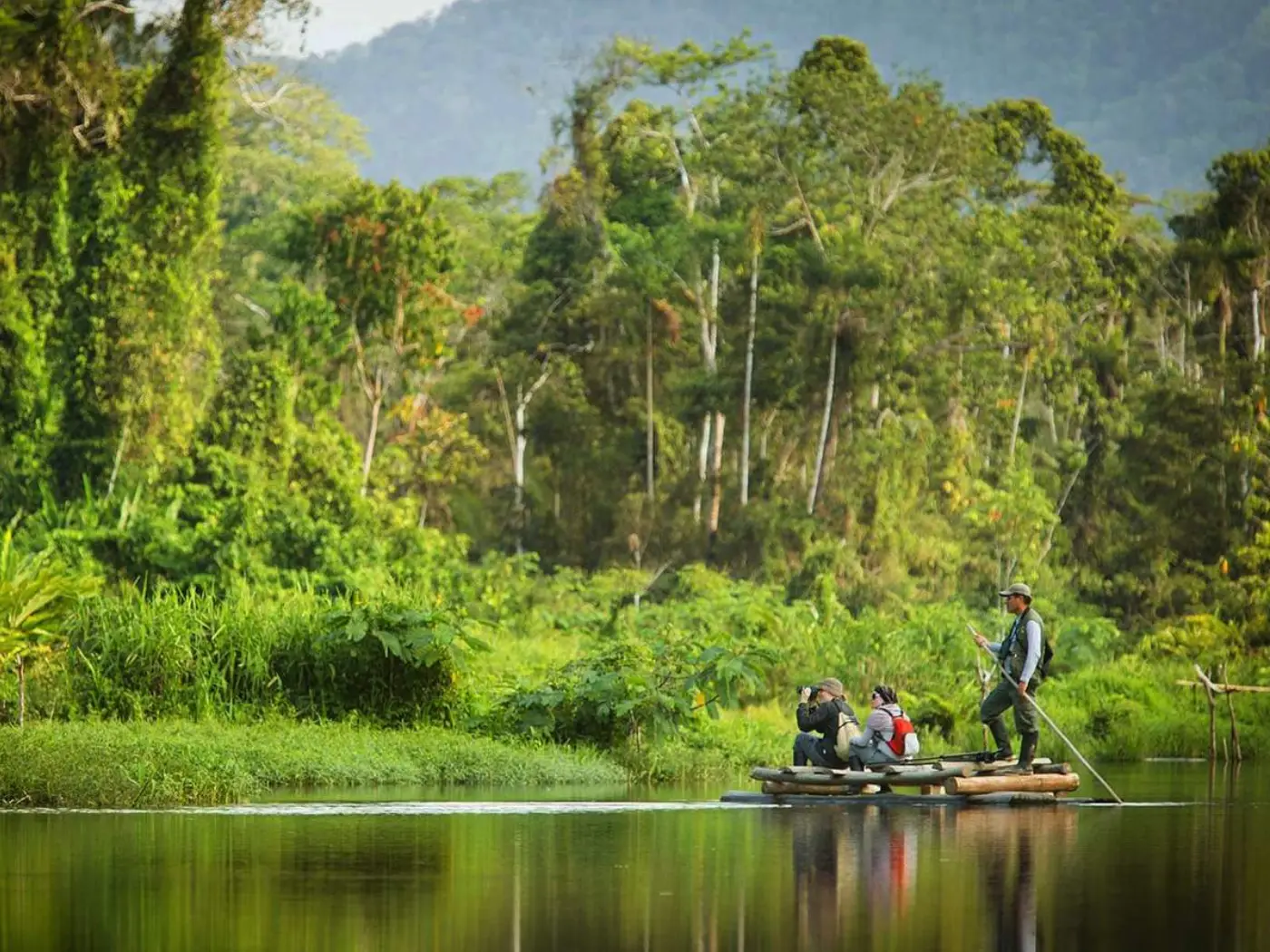
FRThe Manu Zone Reserve Natural is a protected area in the Amazon rainforest of southeastern Peru, known for its incredible biodiversity. The reserve covers over 15,000 square kilometers and is home to over 1,000 species of birds and 13 species of monkeys, as well as jaguars, giant otters, and many other animals.
Visitors can take guided tours to explore the rainforest and its wildlife, and learn about the indigenous people who live in the area. The reserve is also a popular destination for birdwatchers and nature enthusiasts, and offers a unique opportunity to experience the beauty and complexity of the Amazon ecosystem.
Summary – Eight days in the heart of one of the world’s most biodiverse rainforests
Itinerary – Eight Days Exploring the Heart of the Amazon Rainforest
Day 1: Cusco - Cloud Forest - Paucartambo - Pilcopata Lodge
We pick up from your hotel very early in the morning from 5:30 a.m. at 6:00 a.m. in our confortable and private bus. On the way, we visit the funerary towers or Chullpas of Ninamarca at 3750 meters above sea level and brief visit to Paucartambo, a folkloric town, a colonial bridge. We ascend to area of Paucartambo, the Acjanaco sector (4000 m.s.n.m) This is the point of entry to the Manu National Park.
Then we descend through the mysterious cloud forest, which hosts a great variety of flora and fauna, full of beautiful orchids, heliconias and primitive ferns. We toke a walk to give you the opportunity to witness the Cock of the Rocks (Rupícola Peruvian) in the ritual of mating. There are also possibilities to observe Trogones (Trogon sp.), Quetzales (Pharomachrus sp.)
In addition, much more and if we are lucky we can observe Spectacled Bear (Tremantus Ornatus). In the afternoon, we arrive at a village called Pilcopata at 550 meters above sea level in your typical lodge that is outside the town with private bathrooms and showers where we will spend the night.
Day 2: Pilcopata Lodge - Atalaya - Boca Manu
After the delicious breakfast we continue our trip 45 minutes by bus to watchtower port on the way we observe coca and fruit tree plantations, orchids, we embark on motorized boat by the Madre de Dios river. On the way, we can see a variety of birds, such as herons, Kingfisher and always the presence of vultures of wich the most spectacular is the condor of the jungle, the king of vultures (Sarcoramphus papa).
The Jaguar (Panther Onca) we also have a stop in natural hot spring, to take medicinal baths, if we still have time we visit the Native community of Diamante to see their typical constructions of houses and see the wild fruits they have. In the afternoon we arrive at village of Boca Manu ( 280 m.s.n.m.), where we have the accommodation. Lodge with showers and bathrooms.
Day 3: Boca Manu - Cocha Otorongo (Reserve Area)
After breakfast, we enter the reserve area where we will have a better opportunity to observe the biodiversity that the Manu offers, a brief stop in the rangers stations. The boat trip continues and one begins to realize why Manu is so famous for its wildlife. On the banks of the river, there are groups of turtles, white alligators (Cayman cocodrylus) or perhaps some ronsocos (Hydrochoerus, hydrochaeris) and many more.
In the afternoon we arrived at our safari camp in Cocha Otorongo, (2500 m.s.n.m) (double beds inside platforms) shortly after we organized a walk to visit the lake and the observation tower of 30 meters from where we have the opportunity to observe the river giant otters. Here in the Manu the animals have never suffered hunting persecution by men. Nigth in safari camp, on platforms with roof double debs with mosquito net. Showers and shared bathrooms.
Day 4: Cocha Otorongo - Cocha Salvador (Reserved Area)
The groups visits Cocha Salvador today, whichis 30 minutes from Cocha Otorongo. Today, they explore walking in the virgin primary forest. We visit the lake to paddle silently in a catamaran that gives us the possibility to observer the wolves of the river again and a great variety of strange birds.
The sultana cock (Porphyrula Martinica or the Garga Agami (Agamia) and monkeys of different species are almost certainly observed 9 species of the 14 species. We later walked on the main trails with guide to learn the operation and secrets of the tropical forest.
Brief visit to casa Matchiguenka to buy some crafts in the afternoon we return to our camp in Cocha Otorongo. Night in camp on platforms with roof. Beds with mosquito net Showers and shared bathrooms avaible. Optional night walk.
Day 5: Cocha Otorongo - Pakitza (Reserved Area)
Very early in the morning, the group will visit the macaw clay lick is in Quebrada salvadorcillo, then the last surveillance post of the Manu National Park will continue to Pakitza by boat – Pakitza and explore the mammal collpa. In the forest observing different species of plants and birds and with very lucky animals. Night in camp on platforms beds with mosquito net with roof. Showers and bathrooms avaible.
Optional: night walk
Day 6: Cocha Otorongo - Boca Manu
Today we woke up with the howling of the cotomonos, (Alouatta seniculus) unfortunately we have to start our return Boca Manu, we will also have the opinion to see other species of birds and more depending on luck and what nature want to offer. WE VISIT COCHA BRASCO to observe giant otters. Night in lodge. Showers and shared bathrooms.
Optional: Night walk around the lodge
Day 7: Cusco - Cloud Forest - Paucartambo - Pilcopata Lodge
We continue back by boat on the Alto Madre de Dios River. On the way, we have again the option of seeing many birds and likewise with very lucky animals. In the afternoon, we are arriving at our Paititi lodge. We spent the night in the lodge. Showers and private bathrooms available.
Day 8: Pilcopata Lodge - Atalaya - Machuwasi Lake - Paititi Lodge
This day is very sad because we have to leave our wonderful jungle full of mysteries and return by boat to Atalaya, then we travel by bus to Cusco.
On the way, we can observe the Cloud Forest again, with immense variety of flora and fauna and arrive at the city at 6:00 p.m. at 6:30 p.m
Included – Specialized services for an authentic jungle experience
Packing List – What to Bring for a Long Stay in the Rainforest
Travel Info – Important Details Before Entering the Amazon
Briefings
All briefings are done at our office at 5:00 PM one or two nights before your trek. If you are unable to make this time, you need to coordinate another time with a member of the Xtreme Tourbulencia office team. Briefings are approximately 40 minutes long.
Pickups
Xtreme Tourbulencia is one of the only companies to pick you up directly from your hotel. As long as your hotel is in the center of Cusco city, we will coordinate this pickup based on a time that your guide will discuss at the briefing. Pick up times may vary 30 – 45 minutes based on traffic conditions and previous pickups.
Cusco is an old city with cobblestoned streets and very narrow passageways. Smaller hotels and Airbnbs are often located on streets that cars can´t pass through.
They also are frequently on hillsides with long steep climbs, making it difficult to carry luggage. We highly recommend that you book accommodations with better access. We have a list of hotels that are all comfortable with easy access to pick up and drop off.
Health Concerns
You must be honest with your guide about any health conditions or concerns you might have. While our guides are not medical professionals, they do have first aid training. We also work with a clinic in Cusco that can help assist our team.
You are responsible for assessing whether a Tour is suitable for you. You should consult your physician to confirm your fitness for travel and participation in any planned activities. You should seek your physician’s advice on vaccinations and medical precautions.
Xtreme TourBulencia will not provide medical advice. It is your responsibility to assess the risks and requirements of each aspect of the Tour based on your unique circumstances, limitations, fitness level, and medical requirements.
If you develop extreme altitude sickness or any other illness that prevents you from hiking, and you still wish to visit Machu Picchu by train, we will work with you to coordinate this trip. Since this will be a new trip, it may require additional fees. We will use as much of the original itinerary to keep costs low.
If you experience issues while hiking and can not continue, a porter will accompany you to the closest road and wait while a car comes to pick you up and bring you to the nearest health clinic.
Group Tours
Group tours are made up of all different types of people, with various hiking skills and ages. By agreeing to a group tour, you agree that some people might be slower or faster than you are.
Everyone can go at their own pace for the trek, and the guide will work with the group to spend time with everyone. Groups might request some modifications to the tour, and the guide will work with everyone to make the best decision for the group.
Strikes
Unfortunately, strikes are frequent in Peru and can disrupt our tours. Roads are often blocked, and trains stopped. We will make sure your trek continues as planned, even if that means leaving the night before your start date.
Under these circumstances, tours might need to be canceled. But our operations department will coordinate with you in this situation. Your safety is always our top concern and will dictate how we decide.
Lost Items
You are responsible for your items throughout the Tour. Please be diligent about where you leave your things and remember to remove all items from our vans, your tents, restaurant, etc.
Do not leave anything unintended during your hike. Other trekkers or teams might pick it up not knowing whos it is.
Tips
Tipping is part of the tradition of any trek to Machu Picchu. While we pay good wages to our entire team, anything extra is always appreciated. Please know that this is not obligatory and that you should never feel pressured into this.
Typically the participants in a group pool their tipping money together for the porters and chef. The amount recommended is different per trek and listed below.
For the guide, this is more personal and needs to be decided based on your relationship with them and done separately from the group. Porters and Chefs prefer soles if possible. Guides are happy with U.S. dollars, Peruvian Soles, or even your credit card.
Travel Insurance
Travel insurance is inexpensive and strongly recommended. With trips being planned months ahead of time, you never can predict what could happen. Adventure travel includes more risk than the average trip.
Insurance is a way to protect the investment you have made on this journey. We can help recommend an agent to walk you through this type of insurance if needed.