

 EN
 ES
 FR
This trek is ideal for those passengers who really want to be far in the middle of nowhere with only nature surrounding them as they camp or stay at home family in an area that is scarcely seen by tourists. Huchuy Qosqo (small Cusco) is situated above the Valley of Urubamba and offers very spectacular views over the mountain range Cordillera de Vilcanota. You will have one night camping in the wilderness.
Overview: Huchuy Qosqo Trek + Sacred Valley tour 2 days
Huchuy Qosqo Trek + Sacred Valley Highlights (2 Days / 1 Night)
The 2-Day Huchuy Qosqo & Sacred Valley Tour is an ideal combination for travelers looking to experience off-the-beaten-path Andean trekking alongside classic cultural highlights. This itinerary escapes the heavy crowds of standard routes, taking you through high-mountain landscapes, local Andean communities, and the spectacular cliffside ruins of Huchuy Qosqo (Little Cusco), finishing with the iconic cultural sites of the Sacred Valley.
Overview Itinerary
Day 1: Chinchero (Valley of Cuper) – Pucamarca – Huchuy Qosqo
- Pick up from your hotel and drive in the direction of the Inca Site Chinchero (3760 meters).
- Begin trekking up the road as it curves sharply up-hill to reach a pass of nearly 4200 meters
- Continue to follow the trail down into the valley and towards the small community at the bottom
- Pass through the village, and ascend over the second pass (4300 meters) and into high open country.
- Admire Lake Qoricocha (Golden Lake in Quechua)
- Descend towards the Huchuy Qoso (3650 meters), where we’ll arrive in the late afternoon.
- Set up camp or meet your homestay family
- Enjoy dinner under the starry sky
Hiking time: 6 hours
Lunch and dinner: included
Day 2: Huchuy Qosqo - Lamay – Maras Moray – Salt Mine
- Wake up with an enegerizing breakfast and coca tea
- Explore Huchuy Qosqo archaeological site
- Hike the magnificent path, with Pitusiray looming above us, we will passing an Inca stone and adobe gateway.
- Arrive to Lamay where private transport will be waiting to drive us to the next sites
- Explore Moras Moray, Salt mine and Chinchero
- Return to Cusco around 6 pm
Breakfast and lunch: included.
Afternoon (Sacred Valley Highlights): Private transport picks you up in Lamay to explore the circular agricultural laboratory of Moray, the Thousands of Salt Pans at Maras, and the traditional textile village of Chinchero.
Return: Arrive back in Cusco around 6:00 PM.
Trip Essentials & Difficulty
Difficulty Level: Moderate. The main physical challenge is the high altitude on Day 1 (passes up to 4,300 m / 14,100 ft). A minimum of 2 days of acclimation in Cusco is highly recommended.
Best Time to Go: Dry season (April through October) offers the clearest mountain views and dry trails.
Itinerary – Two Days of Scenic Trails and Living Culture
Day 1: Chinchero (Valley of Cuper) – Pucamarca – Huchuy Qosqo
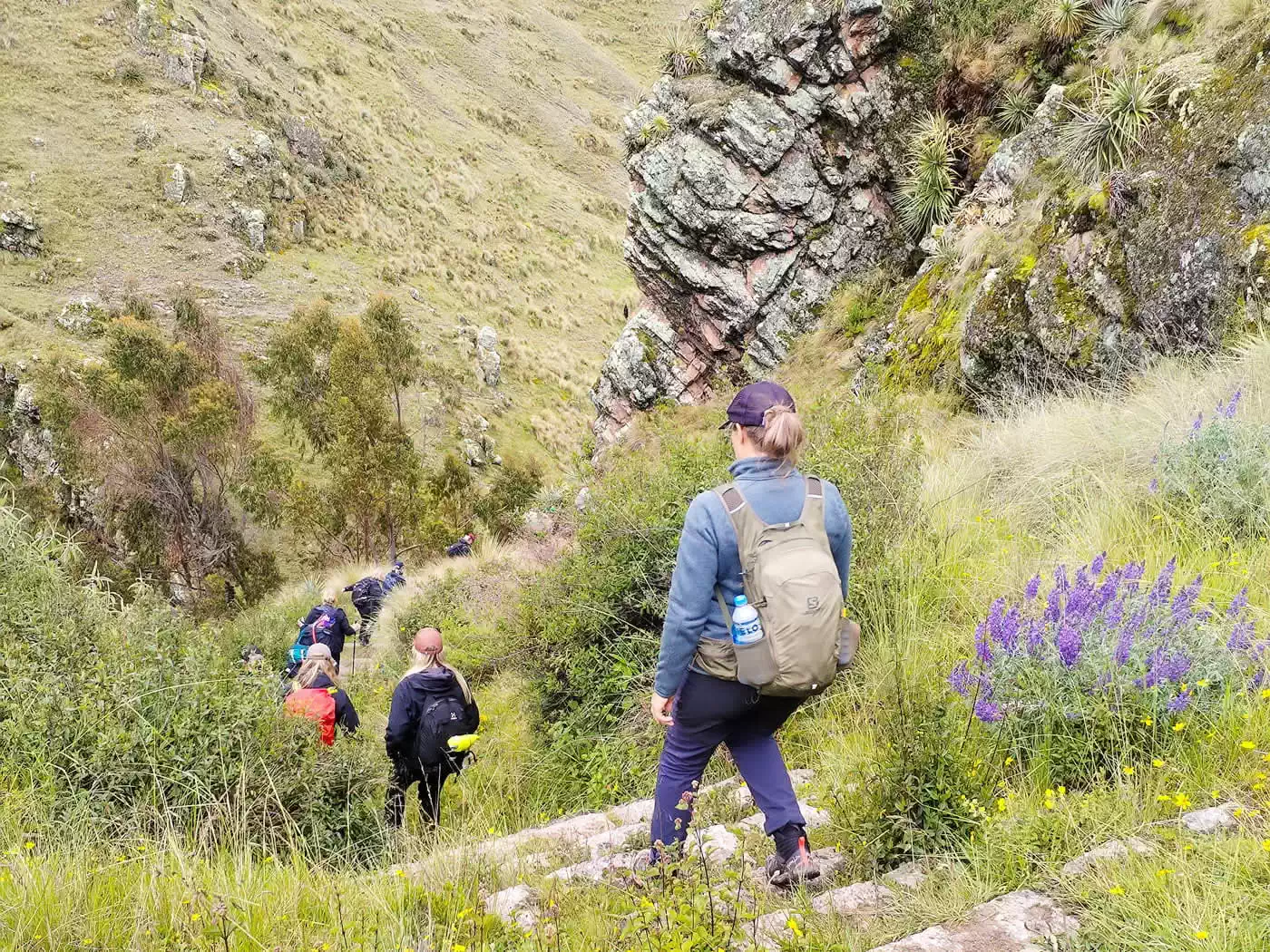
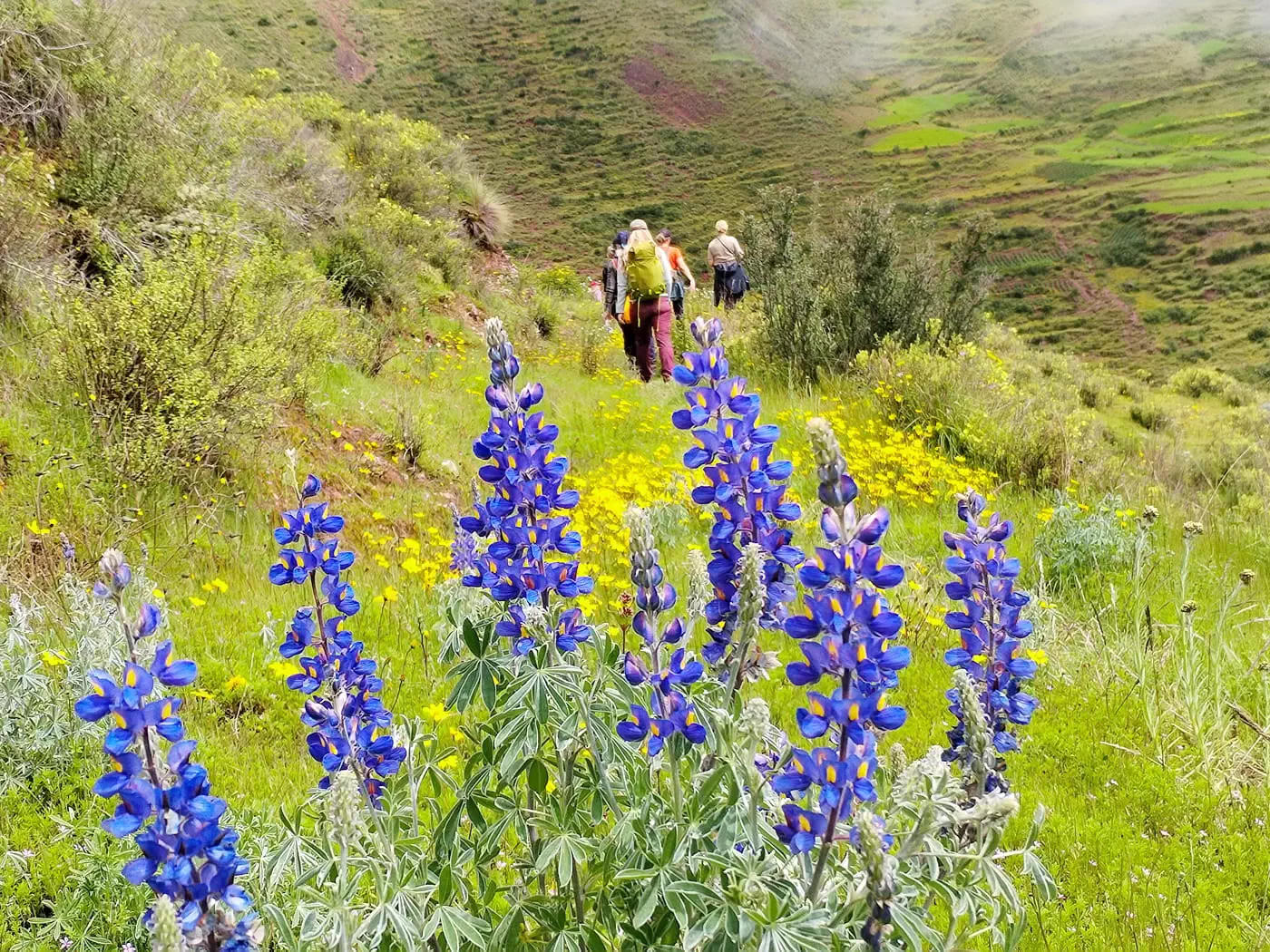
We begin our journey by departing Cusco, by car, in the direction of the Inca Site known as Chinchero (3760 meters). From here, we will begin trekking up the road as it curves sharply up-hill to reach a pass of near 4200 meters. We will continue to follow the trail down into the valley and towards the small community at the bottom. As we descend along the trail, you will see a beautifully green valley stretching out as far as the eye can see.
Passing through the village, the trail takes us up over the second pass (4300 meters) and into high open country. On the way, we will pass by the beautiful Lake Qoricocha (Golden Lake in Quechua). We’ll continue along this rustic trail, with its stellar views of the surrounding mountain ranges.
Finally, we’ll descend towards the Huchuy Qoso (3650 meters), where we’ll arrive in the late afternoon. Here, we’ll set up camp or meet our homestay family and enjoy our supper underneath the great starry sky.
Hiking time: 6 hours
Lunch and dinner: included
Day 2: Huchuy Qosqo - Lamay – Maras Moray – Salt Mine
Huchuy Qosqo is perched above the Urubamba Valley, overlooking the little town of Lamay, which is dedicated to agriculture and raising cattle. Huchuy Qosqo was originally an administrative center, where the Incas built buildings made of stone and adobe which is a great example of Inca style perfectly fitting stones.
Continuing along this magnificent path, with Pitusiray looming above us, we will eventually pass an Inca stone and adobe gateway. This was the entrance to the ruins of Huchuy Qosqo for people who climbed up from the Urubamba Valley.
Our private transport will pick us up from Lamay and drive us to Maras Moray, Salt mine and Chinchero where we will visit the Inca’s sites and the colonial town. We will be back in Cusco at around 6pm.
Breakfast and lunch included.
Inclusions – Everything Arranged for a Smooth Short Escape
Includes:
- Transfer in private transport from your hotel to Chinchero (starting point of the trek)
- Private transport from Lamay to Maras Moray, Salt Mine and Cusco
- Home stay or personal tents for 2 persons
- Dining tent with tables and chairs
- Professional bilingual guide (Spanish and English)
- Meals
- Cook and cooking equipment and kitchen tent
- Porters or horses (Carrying the tents, food and cooking equipment)
- Entrance fee to Huchuy Qosqo
- First-aid kit including emergency oxygen bottle
- Entrance to Maras Moray and Salt Mine and Chinchero
Not included:
- Breakfast at the first and dinner at the last day
- Sleeping bag
Notes:
- From Chinchero to Lamay we are accompanied by porters or horsemen and mules that will carry all camping equipment.
- Tips for porters, cooks and guides are always welcome. The porters are also very grateful for a small donation, for example clothes or school equipment for their children.
Conditions & Terms
- Please note that the program deposit is non-refundable. The deposit is used to purchase the ticket entrance to Machupicchu and also for booking the train ticket and hostels. And once a space is purchased it cannot be resold.
- XTreme Tourbulencia will not give any refunds if a participant decides to cancel the trip prior to departure or during the trip (except from the entrances to the archaeological sites and the bus/train tickets)
If XTreme Tourbulencia doesn’t confirm the reservation, your payment will be refunded totally. - All participants have to carry their own back packs, including sleeping bag and mattresses unless they booked an extra porter or the service includes porters, horsemen or mules.
- A participant must declare if they have any sickness or medical conditions and must bring their own medicines.
- All participants must bring their original passport and, if available, their original student card ´ISIC´.
- It is compulsory that all clients have personal travel insurance. This insurance must cover personal accident, medical expenses, loss of effects and all other expenses which might arise as a result of loss, damage or injury occurring to the client. XTreme Tourbulencia cannot be accounted for any accident or loss of personal belongings the customer caused by his/her own.
- In case force majeure occurs, like impossibility to operate the program or trek due to unusual or unforeseen circumstances outside XTreme Tourbulencia’s control like: extreme weather conditions, landslides, strikes not allowing operation or putting it at risk, sudden inaccessibility of route, etc.
- XTreme Tourbulencia will propose viable solutions to operate the program within the available dates, or if impossible, will then propose an alternative program. If the alternative program chosen by the client is of lower value than that originally booked then the client is entitled to a refund of the price difference.
- All costs derived will be at the expense of the client. In case none of these would be feasible, XTreme Tourbulencia would refund all the money paid except all the incurred expenses so far.
Packing List – Essentials for a Short Valley Trek
What do I need to bring?
- Small backpack with rain shelter (30 or 40 litters is well enough)
- Clothing for warm and cold climate like a waterproof jacket
- Trekking shoes
- Slippers or sandals (for showers and hot springs)
- Woolen or synthetic socksand a sweater
- Long- and short-sleeved polo’s/T-Shirts
- Rainponcho and a hat
- Bathing suit (for the hot springs in Aguas Calientes)
- Sunscreen, insect repellent, disinfecting alcohol and gel and toilet paper
- Camera (wrapped in plastic bag), a flash light and batteries
- Some snacks like chocolate bars and dry fruit
- Original passport, original ISIC student card (In case you are student) and extra money in soles
Hotels – Comfortable Stays Before and After the Trek
To begin, we'd like to suggest some accommodation options in Cusco. Although it's a small city, there are increasingly more pedestrian streets where vehicular traffic is restricted. This situation makes transfers and pick-ups more difficult, so we recommend taking precautions.
Xtreme Tourbulencia has selected comfortable hotels that facilitate transfers and pick-ups for our tours. These are just suggestions.
PRICE - HUCHUY QOSQO TREK + SACRED VALLEY 2 DAYS
In order for us to embark on the Huchuy Qosqo Trek + Sacred Valley 2 days, we have to review availability for your departure date and have a clear start date in order to enjoy our hike. At this moment, Xtreme Tourbulencia requires a minimum of two people in order to confirm a start date. If you are a solo traveler, please consult us for available departure dates.
REGULAR PROGRAMMING:
| REGULAR PROGRAMMING | WITH 3 STAR HOTEL |
| Price | $??? USD |
Optional Add Ons
a) 4 Star Hotel: Enjoy a more pleasant night in comfort Hotel Tierra Viva or Casa Andina depending on availability for $40 USD additional per person.
FAQs – Common Questions About the Huchuy Qosqo Route
What is the Huchuy Qosqo Trek + Sacred Valley 2-Day Tour?
It is a combined itinerary that blends off-the-beaten-path high-Andean trekking with cultural sightseeing. On Day 1, you hike along ancient Inca trails and mountain landscapes to the archaeological site of Huchuy Qosqo ("Little Cusco"). On Day 2, you descend into the Sacred Valley to visit iconic attractions such as Maras, Moray, and Chinchero.
What is the physical difficulty level of this hike?
The difficulty level is moderate. While the trek does not require technical mountaineering experience, Day 1 requires good physical condition due to the high altitude and initial climb over mountain passes.
What is the maximum elevation reached on the route?
The maximum elevation ranges between 4,100 and 4,300 meters (13,450 to 14,100 ft) above sea level on Day 1 while crossing high mountain passes near alpine lakes like Qoricocha. The Huchuy Qosqo site itself is located at around 3,600 meters (11,800 ft).
How many acclimatization days are recommended before taking the tour?
It is recommended to spend at least 2 to 3 days in Cusco or the Sacred Valley prior to the trek. This helps your body adapt to the elevation and prevents altitude sickness (soroche).
What is the accommodation like on Night 1?
Depending on the service tier booked, accommodation is either in a fully-equipped campsite (double four-season thermal tents) near the Huchuy Qosqo complex or in local family homestays as part of community-based tourism programs in the area.
How is heavy luggage transported during the trek?
Main luggage (duffel bags containing clothing and overnight gear) is transported by horsemen and pack horses (or porters, depending on logistics). Each hiker only carries a small daypack with personal items such as water, camera, and windbreaker.
Which Sacred Valley attractions are visited on Day 2?
After descending from Huchuy Qosqo to Lamay, private transportation picks up the group to explore:
- The Moray Inca agricultural testing laboratory.
- The impressive salt evaporation ponds at Maras.
- The traditional textile village and archaeological site of Chinchero.
What is the best time of year to take this tour?
The best time is during the dry season (April through October), when days are clear with little rainfall and panoramic views of the Urubamba mountain range. The rainy season runs from November through March.
What basic clothing and gear should I pack?
Dressing in layers is recommended:
- Thermal/warm clothing for the cold night (down jacket or fleece, beanie, gloves).
- Lightweight, breathable hiking clothes (trekking pants, quick-dry shirts).
- Sturdy hiking boots with good grip and ankle support.
- Waterproof jacket or rain poncho.
- Sun protection (sunscreen, hat, sunglasses).
- Small daypack (20–30L) and trekking poles.
Is the Cusco Tourist Ticket (BTC) included?
Generally, operators do not include entrance tickets in the base package price. To complete the entire itinerary, you will need the Partial or Full Cusco Tourist Ticket (for Moray and Chinchero) and the separate admission ticket for the Maras Salt Mines, both of which can be purchased directly on-site.
Is this tour suitable for children or seniors?
Yes, it is suitable for children aged 10–12 and above who are accustomed to hiking, as well as seniors in good physical condition with proper altitude acclimatization. It is not recommended for individuals with severe cardiovascular or respiratory conditions.
What are meals like during the trek?
Meals are freshly prepared on-site by a specialized trekking chef using fresh, nutritious local ingredients (soups, main courses, meats, carbohydrates). Vegetarian, vegan, or special dietary requirements can be accommodated with prior notice.
Are drinking water and bathroom facilities available on the trail?
Water: The operator typically provides boiled and purified water starting from the first lunch. Hikers are expected to bring 1.5 to 2 liters of water for the initial morning walk.
Bathrooms: Portable toilet tents are set up at the campsite, and basic public restrooms are available near the Huchuy Qosqo archaeological site.
Can this tour be connected to Machu Picchu at the end of Day 2?
Yes! It is a great option. Instead of returning to Cusco on the evening of Day 2 from the Sacred Valley, private transport can drop passengers off at the Ollantaytambo train station to catch an evening train to Aguas Calientes (Machu Picchu Town).
How does this tour differ from the Classic Inca Trail or Salkantay Trek?
- Fewer crowds: It is a quiet, peaceful, and uncrowded circuit.
- Short duration: Ideal for travelers who only have 2 days available for trekking.
- All-in-one combination: Combines pristine mountain landscapes, an uncrowded cliffside Inca site, and essential Sacred Valley cultural stops in a single trip.
TRAVEL INFORMATION
BRIEFINGS
All briefings are done at our office at 5:00 PM one or two nights before your trek. If you are unable to make this time, you need to coordinate another time with a member of the Xtreme Tourbulencia office team. Briefings are approximately 40 minutes long.
PICKUPS
Xtreme Tourbulencia is one of the only companies to pick you up directly from your hotel. As long as your hotel is in the center of Cusco city, we will coordinate this pickup based on a time that your guide will discuss at the briefing. Pick up times may vary 30 – 45 minutes based on traffic conditions and previous pickups.
Cusco is an old city with cobblestoned streets and very narrow passageways. Smaller hotels and Airbnbs are often located on streets that cars can´t pass through.
They also are frequently on hillsides with long steep climbs, making it difficult to carry luggage. We highly recommend that you book accommodations with better access. We have a list of hotels that are all comfortable with easy access to pick up and drop off.
HUAYNA PICCHU / MACHU PICCHU MOUNTAIN
Machu Picchu is most beautiful when seen from above, which is why hiking one of the mountains next to the ruins is very popular to do after your tour.
Huaynapicchu is the most popular and must be booked in advance since it sells out very quickly. This hike takes approximately 1 hour to the top, and another 45 minutes back down. Tickets are sold in time sessions stating when you can start this hike. The first session is from 7-8 AM, and the 2nd session is from 10-11 AM.
Again, this refers to the timeframe when you can start your hike. We usually book the second session so you can enjoy your tour with your guide first. You will do this hike on your own, but your guide will show you where to begin.
Machu Picchu Mountain is a bit longer and a bit less popular. It takes 2 hours to the top and another 1 hours to the bottom. Again there are two time windows – from 7-8 AM and 9-10 AM and we usually purchase the second time window. 4 Day treks, the Trekkers CAN NOT do this hike and enjoy a tour of the ruins. Time will not allow for this.
Hiking either mountain will allow you to have some extra time at the ruins once you complete, as listed above.
MACHU PICCHU ENTRANCE TIMES
Entry times to Machu Picchu are fixed and non-adjustable. Nevertheless, a grace period is typically granted to accommodate unexpected delays.
Schedules (*) | Peak Season: Arrival Policy (**) | Low Season: Arrival Policy (**) |
06:00 am | Until 06:30 am | Until 06:45 am |
07:00 am | Until 07:30 am | Until 07:45 am |
08:00 am | Until 08:30 am | Until 08:45 am |
09:00 am | Until 09:30 am | Until 09:45 am |
10:00 am | Until 10:30 am | Until 10:45 am |
11:00 am | Until 11:30 am | Until 11:45 am |
12:00 pm | Until 12:30 pm | Until 12:45 pm |
01:00 pm | Until 01:30 pm | Until 01:45 pm |
02:00 pm | Until 02:30 pm | Until 02:45 pm |
03:00 pm | Until 03:30 pm | Until 03:45 pm |
(*) Entry time at the main gate of the Inca city of Machupicchu.
(**) Entry at the control points of Machupicchu, Waynapicchu, and Huchuypicchu mountains does not have a grace period.
HEALTH CONCERNS
You must be honest with your guide about any health conditions or concerns you might have. While our guides are not medical professionals, they do have first aid training. We also work with a clinic in Cusco that can help assist our team.
You are responsible for assessing whether a tour is suitable for you. You should consult your physician to confirm your fitness for travel and participation in any planned activities. You should seek your physician’s advice on vaccinations and medical precautions.
Xtreme TourBulencia will not provide medical advice. It is your responsibility to assess the risks and requirements of each aspect of the tour based on your unique circumstances, limitations, fitness level, and medical requirements.
If you develop extreme altitude sickness or any other illness that prevents you from hiking, and you still wish to visit Machu Picchu by train, we will work with you to coordinate this trip. Since this will be a new trip, it may require additional fees. We will use as much of the original itinerary to keep costs low.
If you experience issues while hiking and can not continue, a porter will accompany you to the closest road and wait while a car comes to pick you up and bring you to the nearest health clinic.
GROUP TOURS
Group tours are made up of all different types of people, with various hiking skills and ages. By agreeing to a group tour, you agree that some people might be slower or faster than you are.
Everyone can go at their own pace for the trek, and the guide will work with the group to spend time with everyone. Groups might request some modifications to the tour, and the guide will work with everyone to make the best decision for the group.
STRIKES
Unfortunately, strikes are frequent in Peru and can disrupt our tours. Roads are often blocked, and trains stopped. We will make sure your trek continues as planned, even if that means leaving the night before your start date.
Under these circumstances, tours might need to be canceled. But our operations department will coordinate with you in this situation. Your safety is always our top concern and will dictate how we decide.
LOST ITEMS
You are responsible for your items throughout the tour. Please be diligent about where you leave your things and remember to remove all items from our vans, your tents, restaurant, etc.
Do not leave anything unintended during your hike. Other trekkers or teams might pick it up not knowing whose it is.
TIPS
Tipping is part of the tradition of any trek to Machu Picchu. While we pay good wages to our entire team, anything extra is always appreciated. Please know that this is not obligatory and that you should never feel pressured into this.
Typically the participants in a group pool their tipping money together for the porters and chef. The amount recommended is $20 USD per person per trek.
For the guide, this is more personal and needs to be decided based on your relationship with them and done separately from the group. Porters and Chefs prefer soles if possible. Guides are happy with U.S. dollars, Peruvian Soles, or even your credit card.
TRAVEL INSURANCE
Travel insurance is inexpensive and strongly recommended. With trips being planned months ahead of time, you never can predict what could happen. Adventure travel includes more risk than the average trip.
Insurance is a way to protect the investment you have made on this journey. We can help recommend an agent to walk you through this type of insurance if needed.
WEATHER
Of course, the weather is unpredictable. Typically the dry season in Cusco is from April through October, but this does not stop rain from falling in June or the sun from coming out in December so just be prepared.
No matter what month you are doing the trek, make sure that you have rain gear that includes a waterproof jacket, pants, poncho, and waterproof gloves. Many people forget about gloves, but being cold and wet makes hiking very unpleasant.
Also, prepare for four seasons. Several of the treks through the Andes involve various microclimates and you will need to be prepared. Layers are always key since they are easy to adjust to different temperature changes. Be prepared with a warm packable down jacket since the evening will be cold.
It’s also important to note that the weather can change a listed itinerary. There are times that routes become impassable, and our guides will be forced for your safety to rework your tour.
ALTITUDE SICKNESS
As soon as people book their trip to Peru, specifically Cusco, they start wondering about altitude sickness. The air at high altitudes contains less oxygen than at sea level and forces your body to work harder to get the oxygen it needs.
Over several days at high altitude, your body adjusts to the lower amount of oxygen in the air. For this reason, we always recommend spending at least two days in Cusco before beginning any trek in the Andes. Cusco is a marvelous city with lots to do, so if you have more time to acclimate you won´t be bored.
With altitude sickness, you may first feel like you have the flu or a hangover. You may have a headache, tiredness, loss of appetite, nausea or vomiting, dizziness, trouble sleeping, trouble breathing during exercise. If any of these effects become severe, please contact our office, and we will help you get to a doctor.
Most of the time, these symptoms will be mild. We always recommend easing into activity slowly, allowing your body to adjust. Drink plenty of fluids such as water or coca tea.
Coca tea has been used since ancient times to help prevent altitude sickness. Leaves from the Coca Plant contain alkaloids that help bring oxygen into your blood, helping your body avoid the effects of altitude sickness. Avoid drinking a lot of alcohol and coffee. They will cause you to urinate more often and become dehydrated. Avoid smoking. Smoking makes it more difficult for your body to get oxygen. Avoid sleeping pills. They may cause shallow breathing at night, making it more difficult for your body to absorb oxygen while you sleep.
Remember the trek to Machu Picchu is not a race. Even those in the best shape will suffer from altitude sickness if they race to the top of the mountain too quickly. Go slow, and it will give your body time to adjust to the elevation.
Your healthcare provider may prescribe medications, such as acetazolamide and dexamethasone, to help prevent altitude sickness. Start the medicine two days before you get to a high altitude. Continue to take it while you are at high altitude.
You must remember that this is your holiday and you do not want to stress out about the possibility of getting sick from the mountains. Do everything slowly and drink lots of water, and enjoy the coca tea.
If anything does happen and you, unfortunately, get sick, let your guide know right away. Xtreme Tourbulencia guides are trained to help you get through it.
GETTING TO CUSCO
The airport in Cusco currently is only for domestic flights, so all international travelers by plane must disembark in Lima and go through Customs. Even if your flight to Cusco is the same day by the same airline carrier, you must grab your bags in Lima and then check them back in.
The best way to get to Cusco is by air, and there are several options in airlines. LATAM tends to be the most expensive but has the most options and flights. Expect delays or flight cancellations. Due to the high altitude of Cusco, it tends to be difficult to land, and any inclement weather will stop air traffic.
Bus travel is always available, and while the trip can be long, especially from Lima, the buses in Peru are very well maintained and comfortable. This option is strongly encouraged if coming from a city closer to Cusco, like Puno. Lima buses will take about 20 hours to arrive.