

 EN
EN ES
ES FR
FRPeru is full of different traditional clothing styles and each style has been crafted to adapt to its ennvironment. In this article we will explain to you the different styles you may see on your trip. Let’s go by parts, Peru is divided into three main regions: coast, highlands and jungle. Each one has its own style, and all of them are amazing!
Peruvian coastal clothing
The clothing of the Peruvian coast is lighter and simpler compared to other regions. Here the warm climate and proximity to the sea directly influence the materials and designs.
Key features:
- Cool fabrics such as cotton or linen.
- Softer colors, with colorful embroidery details.
- Long skirts, embroidered blouses, and scarves or wide-brimmed hats.
Practical example:
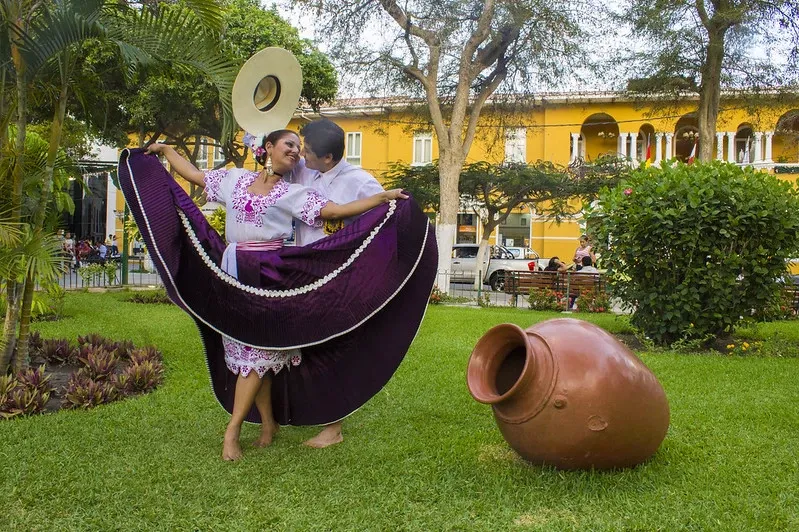
In the department of Lima, during the festivities of the Señor de los Milagros or in Creole festivals, many women wear the classic black pleated skirt, white embroidered blouse and a lace mantilla, while men wear white shirts and dark pants with straw hats.
Variants:
- Typical clothing from the coast of Peru in Piura and Tumbes includes light fabrics, used both for everyday wear and for dances such as the marinera.
- In Ica, the typical attire of the Peruvian coast stands out with colorful blouses and lace skirts, perfect for dancing and partying.
- In Callao, the traditional costumes of the Peruvian coast have a marine influence, with blue and white details.
Typical Costumes of the Sierra Highlands
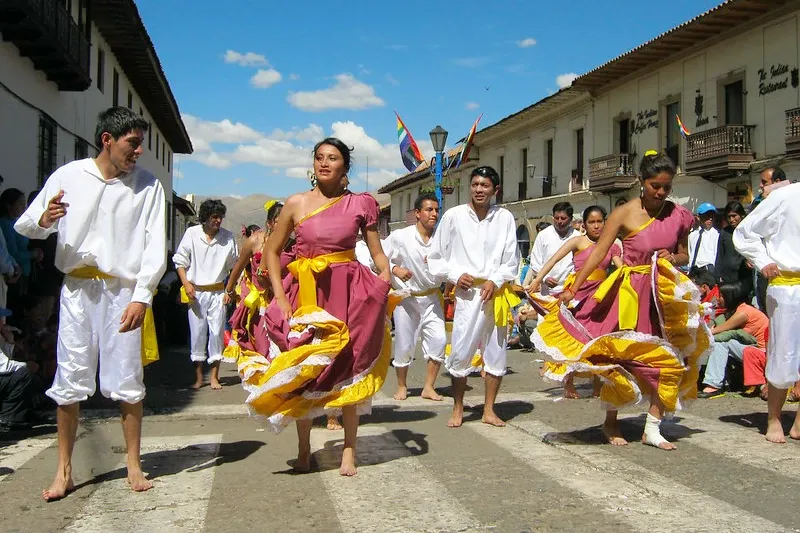
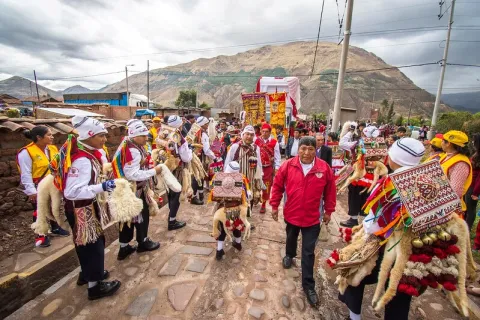
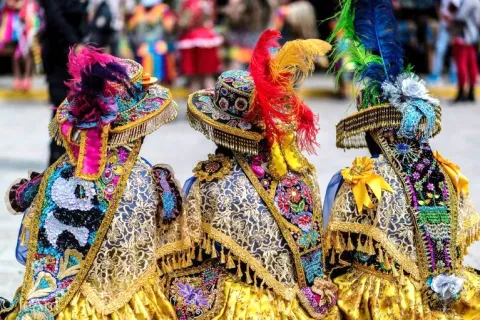
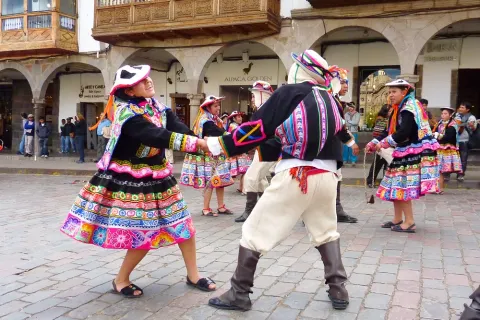
This is where we find the most colorful and elaborate costumes in the country. Alpaca and sheep wool are the star materials.
- In Cusco, women wear polleras (skirts with several pleats), blankets called llicllas, and decorated hats.
- In Puno, the costume of the Diablada dance is a spectacle in itself.
Typical Jungle Costumes
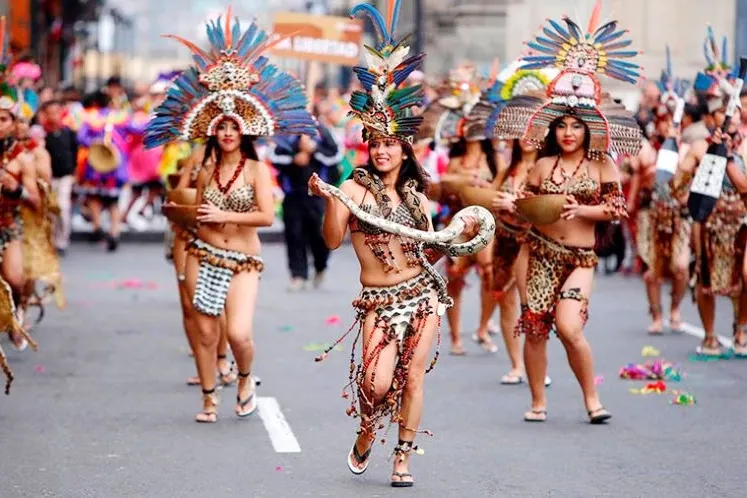
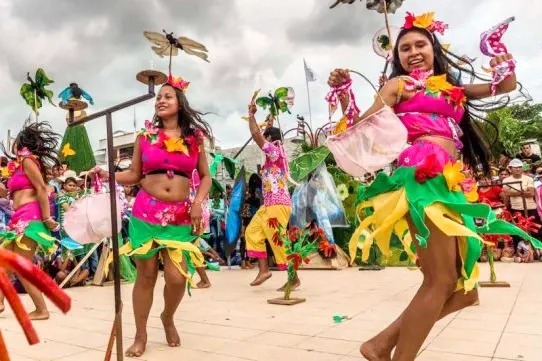
In the Peruvian Amazon, traditional clothing is lighter and often decorated with seeds, feathers and natural dyes.
- Communities such as the Shipibo-Conibo decorate their textiles with unique geometric designs.
- On festivities such as San Juan, you will see a lot of joy and bright colors.
Key Traditional Garments of Peru — and What They Mean
Beyond regional styles, a handful of iconic garments appear again and again across the Andes. Here is what they are and what they represent:
- Pollera: the wide, multi-layered pleated skirt worn by Andean women. The number of layers and the embroidery often signal a woman's community and status.
- Lliclla: a rectangular handwoven shawl fastened at the chest with a pin (tupu), used to keep warm and to carry babies or goods on the back.
- Montera: the traditional hat. Its shape, colour and decoration change from village to village and instantly reveal where the wearer is from.
- Chullo: the knitted wool hat with ear flaps, typical of the high Andes. Boys traditionally learn to knit their own.
- Poncho: the woven outer garment worn by men, often in colours and patterns specific to each region or occasion.
- Ojotas: sandals traditionally made from leather and, today, often from recycled tyres — practical footwear for mountain trails.
- Unku: a sleeveless tunic with pre-Hispanic roots, still worn in some ceremonies.
The Art Behind the Cloth: Weaving and Natural Dyes
What makes Andean clothing so special is not only how it looks, but how it is made. Most pieces are still woven by hand on a backstrap loom, a technique passed down for thousands of years. The wool comes mainly from alpaca and sheep — you can read more about alpaca wool and why it is so prized.
The colours are often created with natural dyes: cochineal (an insect) for deep reds and pinks, indigo for blues, and plants and minerals for yellows and greens. Every motif — birds, rivers, mountains, the Inca cross — carries meaning, telling stories of the community and the landscape around it.
Where to See and Buy Authentic Peruvian Textiles
If you want to experience this living tradition, the Cusco region is the best place in Peru:
- Chinchero and the Sacred Valley: weaving communities give live demonstrations of natural dyeing and backstrap weaving, and sell directly to visitors.
- Pisac Market: one of the most famous Andean markets for textiles, hats and crafts.
- Cusco city: the Centro de Textiles Tradicionales del Cusco is a great place to see museum-quality weaving and support artisans directly.
Buying tip: genuine handwoven alpaca feels soft and slightly uneven; very cheap, perfectly uniform "alpaca" is usually acrylic. Buying from cooperatives helps ensure the money reaches the weavers.
Why Does Preserving These Styles Matter?
Because they are much more than clothes: they are history, identity and national pride. Every time someone wears one of these costumes, they are helping to keep an ancestral tradition alive.
In addition, the artisans who make them, often by hand, deserve all our recognition and support.
Conclusion
The clothing of the Peruvian coast, as well as that of the highlands and jungle, is a reflection of the diversity and cultural richness of the country. From the embroidery to the colors, every detail has a meaning. Whether in a dance, a party or a fair, Peru’s traditional costumes continue to speak powerfully of its roots. Do you dare to discover them on your next trip?
Frequently Asked Questions
What is a pollera?
A pollera is the traditional wide, layered pleated skirt worn by women in the Peruvian Andes. Its colours, embroidery and number of layers often indicate the wearer's home community.
What is the traditional Peruvian hat called?
There are two main ones: the montera, a formal hat whose shape and decoration vary by region, and the chullo, a knitted wool hat with ear flaps worn in the high Andes.
What is Peruvian traditional clothing made from?
Mostly alpaca and sheep wool in the highlands, and lighter cotton or linen on the coast. Amazonian communities also use seeds, feathers and natural fibres.
Where can I buy authentic Peruvian textiles?
The Cusco region — Chinchero, Pisac Market and weaving cooperatives in the city — is the best place. Buying directly from cooperatives helps ensure the artisans are paid fairly.